

Why Finding the Right Dog-Friendly Apartment Matters
Apartments dogs allowed come with specific policies, fees, and restrictions that vary widely between properties. Understanding these differences helps dog owners find housing that truly welcomes their pets rather than just tolerating them.
Quick Answer for Apartment Hunters:
- Pet-friendly apartments typically allow 1-2 dogs per unit with breed and weight restrictions
- Common costs include pet deposits and monthly pet rent
- Service dogs and emotional support animals have special legal protections under federal law
- Most apartments restrict dogs over 25 pounds and certain breeds like pit bulls or German shepherds
- Best search tools include pet-specific filters on rental sites and the National Dog Inclusive Rental Database
The search for dog-friendly housing can feel overwhelming. With over 32,000 pet-friendly apartments in cities like Dallas alone, the options exist - but finding the right match requires understanding pet policies, legal rights, and what amenities make apartment living work for both dogs and their owners.
Many renters find that "pet-friendly" doesn't always mean dog-friendly in practice. Some properties welcome small cats but restrict dogs entirely. Others allow dogs but impose strict breed lists, weight limits, or excessive fees that make renting impractical.
The reality is simple: most apartments that allow dogs will charge extra fees, limit the number of pets, and maintain restrictions on size or breed. But armed with the right knowledge about policies, legal protections, and search strategies, dog owners can find apartments that genuinely welcome their four-legged family members.
What Makes a Dog-Friendly Apartment?

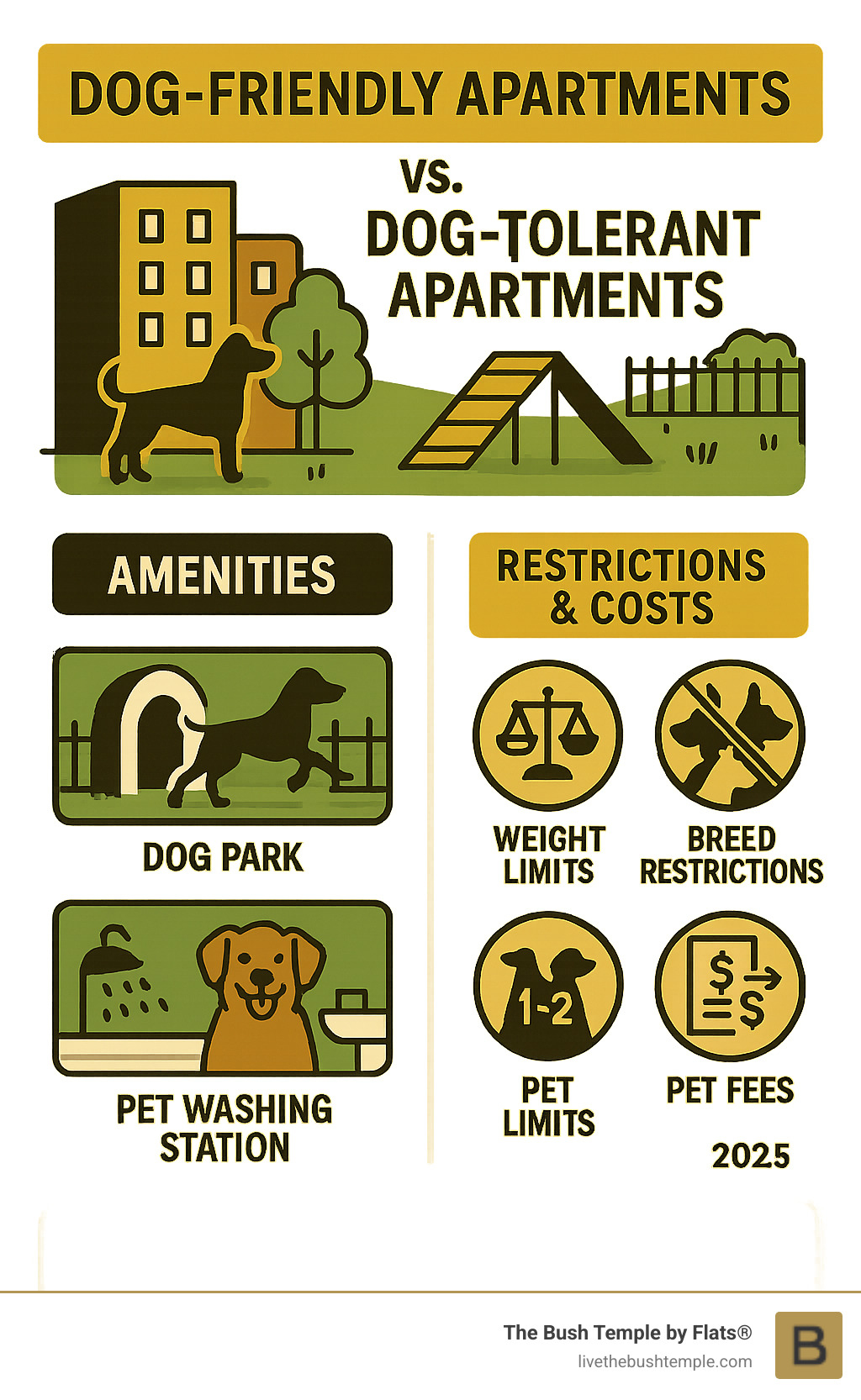
Understanding what makes an apartment truly dog-friendly goes beyond a simple "pets allowed" designation. The best apartments dogs allowed offer thoughtful amenities and reasonable policies that accommodate both pets and their owners.
Most pet-friendly apartments limit the number of pets to one or two within each unit. This standard helps maintain a peaceful living environment while still allowing residents to have beloved companions. Property managers typically require documentation including vaccination records, proof of spay/neuter procedures, and sometimes behavioral references from previous landlords.
Weight restrictions are extremely common, with most apartments that restrict dogs by their weight usually not allowing any heavier than 25 pounds. This limitation often surprises renters who assume "pet-friendly" means all pets are welcome. Many apartments also enforce breed restrictions, commonly prohibiting pit bulls, German shepherds, and Rottweilers due to insurance requirements rather than actual behavioral concerns.
The financial aspect varies significantly between properties. Some charge refundable pet deposits, while others implement monthly pet rent. Understanding whether charges are one-time fees or ongoing monthly costs helps with comparison shopping.
Training expectations often appear in lease agreements, though enforcement varies. Properties may require proof of basic obedience training or house-training certifications. Quiet-hours clauses specifically address barking and noise concerns, typically restricting excessive noise during evening and early morning hours.
Defining "Dog-Friendly" vs. "Dogs Tolerated"
The distinction between dog-friendly and dog-tolerant communities becomes clear when examining amenities and policies. Dog-friendly apartments actively cater to pet owners with features like on-site dog parks, pet washing stations, and waste bag dispensers throughout the property.
Dog-tolerant apartments simply allow pets without providing special accommodations. These properties might permit dogs but offer no pet-specific amenities, maintain strict noise policies, or charge higher fees that suggest reluctant acceptance rather than genuine welcome.
Noise standards in truly dog-friendly communities acknowledge that dogs make sounds while maintaining reasonable expectations. These properties often have sound-dampening features in floors and walls, designated areas for pet activities, and clear guidelines about managing barking rather than blanket restrictions.
Safety rules in dog-friendly apartments typically include leash requirements in common areas, vaccination mandates, and waste disposal protocols. The best properties provide infrastructure to support these rules, such as waste stations, leash hooks near entrances, and well-lit walking paths.
Neighbor courtesy expectations work both ways in dog-friendly communities. Pet owners must manage their dogs responsibly, while other residents understand that pet sounds and activities are part of community life. Clear communication about expectations helps prevent conflicts.
Typical Pet Policies and Paperwork
Lease addenda specifically addressing pets form the foundation of most rental agreements. These documents outline permitted pet types, number restrictions, size limits, and behavioral expectations. Reading these carefully before signing prevents surprises later.
Vaccination records typically must be current and include rabies, distemper, and other core vaccines. Many properties require annual updates to these records, making ongoing veterinary care a rental requirement rather than just a health recommendation.
Renter's insurance riders covering pet-related damage or liability often become mandatory. These additions protect both tenants and landlords from potential costs related to pet behavior, property damage, or injury incidents involving pets.
Finding Apartments Dogs Allowed

The search for apartments dogs allowed requires strategic use of available tools and resources. Success depends on knowing where to look, what questions to ask, and how to present both yourself and your dog as desirable tenants.
Online apartment listing platforms now include sophisticated pet filters that go beyond basic "pet-friendly" designations. These tools allow searches for specific pet types, size allowances, and even breed-friendly properties. Using multiple search terms like "dog-friendly," "small dogs allowed," or "no breed restrictions" can reveal different sets of results.
The National Dog Inclusive Rental Database specifically lists properties that have no breed or weight restrictions. This specialized resource helps owners of restricted breeds find housing options that might not appear in general searches.
Specialty listing sites focus exclusively on pet-friendly housing, offering more detailed pet policy information than general rental platforms. These sites often include photos of pet amenities, detailed policy explanations, and contact information for pet-friendly property managers.
Local real estate agents familiar with pet-friendly properties can provide insider knowledge about upcoming availability, property managers who negotiate on pet policies, and buildings with particularly welcoming attitudes toward dogs. Building relationships with these professionals can lead to off-market opportunities.
Creating a pet resume helps distinguish applications in competitive markets. These documents include photos, vaccination records, training certificates, and references from previous landlords or veterinarians. A well-prepared pet resume demonstrates responsibility and can overcome initial hesitations about pet policies.
Virtual tours specifically highlighting pet amenities help narrow down options before scheduling in-person visits. Properties that showcase dog parks, washing stations, or pet-friendly features in their virtual tours signal genuine commitment to pet-owning residents.
For those considering River North in Chicago, River North Pet Friendly Apartments offer luxury amenities combined with pet-friendly policies in one of the city's most desirable neighborhoods.
Online Tools & Databases Featuring Apartments Dogs Allowed
Keyword searches require strategic thinking beyond obvious terms. Searching for "no breed restrictions," "dogs welcome," or "pet deposit waived" can reveal properties that don't appear in standard "pet-friendly" results. Different platforms use varying terminology, making multiple search approaches necessary.
Map overlays showing pet-friendly properties in specific neighborhoods help identify clusters of dog-welcoming buildings. These visual tools often reveal patterns, such as newer developments being more pet-friendly or certain neighborhoods having higher concentrations of pet-welcoming properties.
Alert systems notify users when new pet-friendly listings appear in desired areas. Setting up multiple alerts with different search criteria increases chances of finding suitable options quickly in competitive markets.
Saved searches across multiple platforms streamline the ongoing search process. Markets change rapidly, and new pet-friendly properties regularly become available. Maintaining active searches across several sites ensures comprehensive coverage of available options.
Networking & Negotiating for Apartments Dogs Allowed
References from previous landlords carry significant weight in pet-friendly housing applications. Positive references specifically mentioning responsible pet ownership, property care, and good neighbor behavior can overcome initial policy concerns.
Meet-and-greets between potential tenants, their dogs, and property managers help build personal connections. Well-behaved dogs making good first impressions can influence decisions, especially in borderline cases where pets might exceed stated size limits or fall into restricted categories.
Offering obedience certificates, additional security deposits, or pet insurance coverage demonstrates commitment to responsible ownership. These voluntary additions to applications show seriousness about maintaining property standards and respecting community rules.
Legal Protections for Service Dogs & Emotional Support Animals
Federal law provides significant protections for people with disabilities who require service dogs or emotional support animals. The Fair Housing Act and Americans with Disabilities Act create rights that override standard pet policies in most rental situations.
Under the Fair Housing Act, landlords must make reasonable accommodations for service dogs and emotional support animals. This means waiving pet fees, ignoring breed restrictions, and allowing these animals even in "no pets" properties. The accommodation must be reasonable and directly related to the person's disability.
Service dogs receive the strongest protections under the ADA. These animals are individually trained to perform specific tasks for people with disabilities. Unlike emotional support animals, service dogs can accompany their handlers in all public spaces and have broader legal protections.
Landlords may only ask two specific questions about service dogs: whether the dog is required because of a disability, and what task the dog has been trained to perform. They cannot ask about the nature of the disability, require medical documentation, or demand demonstrations of the dog's training.
No pet fees apply to service dogs or emotional support animals under federal law. This includes pet deposits, monthly pet rent, and any other charges typically associated with pets. Landlords cannot circumvent this protection by charging "accommodation fees" or other renamed charges.
The HUD complaint process provides enforcement when landlords violate these protections. Complaints can be filed online at file a complaint or through local fair housing organizations. Understanding these rights helps ensure proper treatment during the housing search.
For comprehensive information about tenant rights regarding pet policies, Your Rights With Apartment Pet PoliciesMore provides detailed guidance on federal protections and enforcement options.
When Can a Landlord Deny an Assistance Animal?
Direct threat evidence must be specific and documented to justify denying an assistance animal. Landlords cannot rely on breed stereotypes, size assumptions, or general fears. They must demonstrate that the specific animal poses a direct threat to the health or safety of others.
Property damage history related to the specific animal can justify denial, but general assumptions about potential damage cannot. Previous incidents must be documented and directly related to the animal in question, not based on breed characteristics or size concerns.
Exempt owner-occupied buildings include properties where the owner lives in the building and it contains four or fewer units. Single-family homes rented without real estate agents also qualify for exemptions. These exemptions are narrow and don't apply to most professionally managed apartment complexes.
Fundamental alteration of property operations rarely justifies denial of assistance animals. The accommodation must impose an undue financial burden or fundamentally alter the nature of the housing provider's operations. This standard is difficult to meet in typical rental situations.
Required Documentation Myths vs. Facts
ESA letter basics require letters from licensed mental health professionals stating that the animal provides emotional support related to a disability. The letter must be current, typically within one year, and from a professional with an established relationship with the person requesting accommodation.
Task-trained service dog proof doesn't require special certifications or registrations. No official service dog registry exists, and landlords cannot require proof of training from specific organizations. The dog's training must be related to the person's disability, but documentation requirements are minimal.
Privacy boundaries protect tenants from intrusive questions about their disabilities. Landlords cannot ask for medical records, detailed disability descriptions, or require disclosure of specific conditions. The focus must remain on the accommodation request, not the underlying disability.
Online certification scams prey on people seeking legitimate documentation. Websites offering to "register" service dogs or provide instant ESA letters often provide worthless documents. Legitimate accommodations require proper medical relationships and professional evaluations.
Amenities & Lifestyle Tips for Happy Apartment Pups

The best apartments dogs allowed offer amenities that make urban living enjoyable for both dogs and their owners. These features transform apartment living from a compromise to an ideal lifestyle for pet-owning families.
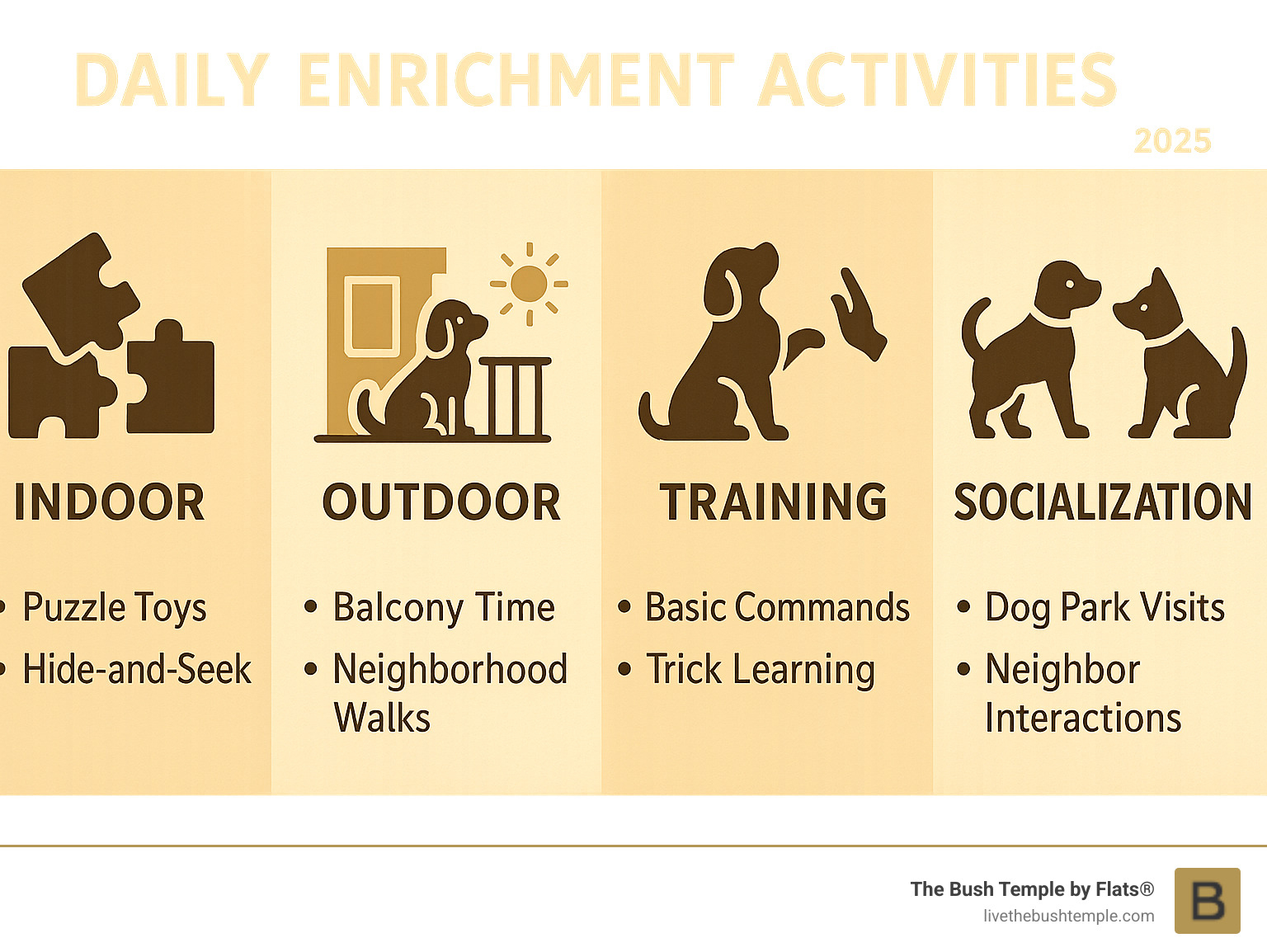
On-site dog parks provide safe, enclosed spaces for off-leash exercise and socialization. The most thoughtful properties include separate areas for different sized dogs, agility equipment, and comfortable seating for owners. These spaces become community gathering points where neighbors connect over their shared love of dogs.
Pet washing stations eliminate the challenge of bathing dogs in apartment bathrooms. Professional-grade facilities with adjustable tables, specialized faucets, and grooming supplies make pet care convenient and stress-free. Some luxury properties even offer professional grooming services on-site.
Walking trails within or adjacent to apartment communities provide convenient exercise options. Properties near parks, waterfront paths, or dedicated walking areas offer lifestyle advantages that extend beyond basic pet accommodation.
Paw-wash stations near building entrances help maintain clean common areas while acknowledging that dogs will get dirty during walks. These simple amenities demonstrate thoughtful planning for pet-owning residents.
Waste-bag dispensers throughout the property support responsible pet ownership while making compliance convenient. The best properties place these strategically along walking routes and near entrances.
Balconies in dog-friendly apartments often include pet-safe railings and surfaces suitable for pets. Some properties even provide artificial turf sections on balconies, creating outdoor relief areas for dogs.
Sound-dampening floors and walls in pet-friendly buildings reduce noise transmission between units. This consideration benefits both pet owners and other residents by minimizing conflicts over pet-related sounds.
At FLATS® properties like The Bush Temple in River North, luxury Amenities are designed with pet owners in mind, combining historic charm with modern conveniences that make apartment living work for the whole family.
Obedience classes offered by or near apartment communities help residents maintain well-behaved pets. Some properties partner with local trainers to provide on-site classes, creating convenient opportunities for ongoing training.
Routine exercise schedules become crucial in apartment living. Dogs need consistent activity to prevent behavioral problems that could jeopardize housing arrangements. Properties with multiple exercise options support these routines.
Preparing Your Home
Chew-proof décor protects both personal belongings and rental property. Choosing furniture and accessories that can withstand curious puppies or anxious dogs prevents damage that could result in security deposit losses.
Crate placement in apartments requires consideration of space constraints and neighbor noise. Positioning crates away from shared walls and in comfortable, quiet areas helps dogs feel secure while minimizing disturbance to neighbors.
Baby gates create safe spaces within apartments while preventing access to areas that might be off-limits or dangerous. These temporary barriers help dogs adjust to apartment living while protecting property.
Flooring protection through rugs, mats, or temporary coverings preserves rental property while accommodating pets. Many leases specify requirements for floor protection, making these investments necessary rather than optional.
Community Etiquette
Elevator manners become essential in high-rise living. Dogs must be comfortable in elevators and well-behaved around other residents. Training dogs to sit calmly during elevator rides prevents conflicts and demonstrates responsible ownership.
Leash laws in apartment communities typically require leashes in all common areas, including hallways, lobbies, and outdoor spaces. Even the most well-behaved dogs must remain leashed to comply with property rules and local ordinances.
Waste disposal protocols extend beyond basic cleanup to include proper disposal methods and timing. Some properties provide special waste stations or require specific disposal procedures that residents must follow consistently.
Noise management requires ongoing attention to barking, running, and other pet sounds. Understanding quiet hours, using white noise machines, and addressing excessive barking quickly helps maintain good neighbor relationships.
Frequently Asked Questions about Apartments Dogs Allowed
What size or breed restrictions are most common?
Most apartments that restrict dogs by weight usually won't allow any heavier than 25 pounds. This restriction affects a significant portion of dog breeds and often surprises renters who assume "pet-friendly" means all sizes are welcome.
Breed restrictions commonly target pit bulls, German shepherds, and Rottweilers, though lists vary by property and insurance requirements. Some properties maintain extensive breed restriction lists, while others focus on individual dog behavior rather than breed characteristics.
The National Dog Inclusive Rental Database specifically helps owners of restricted breeds by listing properties with no breed or weight restrictions. This resource proves invaluable for owners of dogs that commonly face housing discrimination.
Can a landlord charge extra rent for my pet?
Pet-friendly apartments may come with additional costs, such as pet deposits or monthly pet rent. Pet rent is a monthly fee paid in addition to regular rent to accommodate a pet, while pet fees are one-time payments required to allow pets on the property.
Refundable pet deposits and monthly pet rent vary by property. Understanding whether charges are refundable deposits or ongoing fees helps with property comparison.
Service dogs and emotional support animals are exempt from all pet-related fees under federal law. Landlords cannot charge pet deposits, monthly pet rent, or any other fees for these assistance animals, regardless of property pet policies.
How do I prove my dog is an emotional support animal?
Emotional support animal letters must come from licensed mental health professionals who have an established relationship with the person requesting accommodation. The letter should be current, typically within one year, and specifically state that the animal provides emotional support related to a disability.
No official registration or certification is required for emotional support animals. Websites offering to "register" ESAs or provide instant letters often provide worthless documents that landlords can legally reject.
The letter must include the professional's license information, contact details, and a statement that the person has a disability and the animal provides emotional support related to that disability. Generic letters or those from professionals without established relationships typically don't meet legal requirements.
Conclusion

Finding apartments dogs allowed requires patience, preparation, and knowledge of both legal rights and practical realities. The best outcomes result from understanding pet policies, preparing proper documentation, and choosing properties that genuinely welcome dogs rather than merely tolerating them.
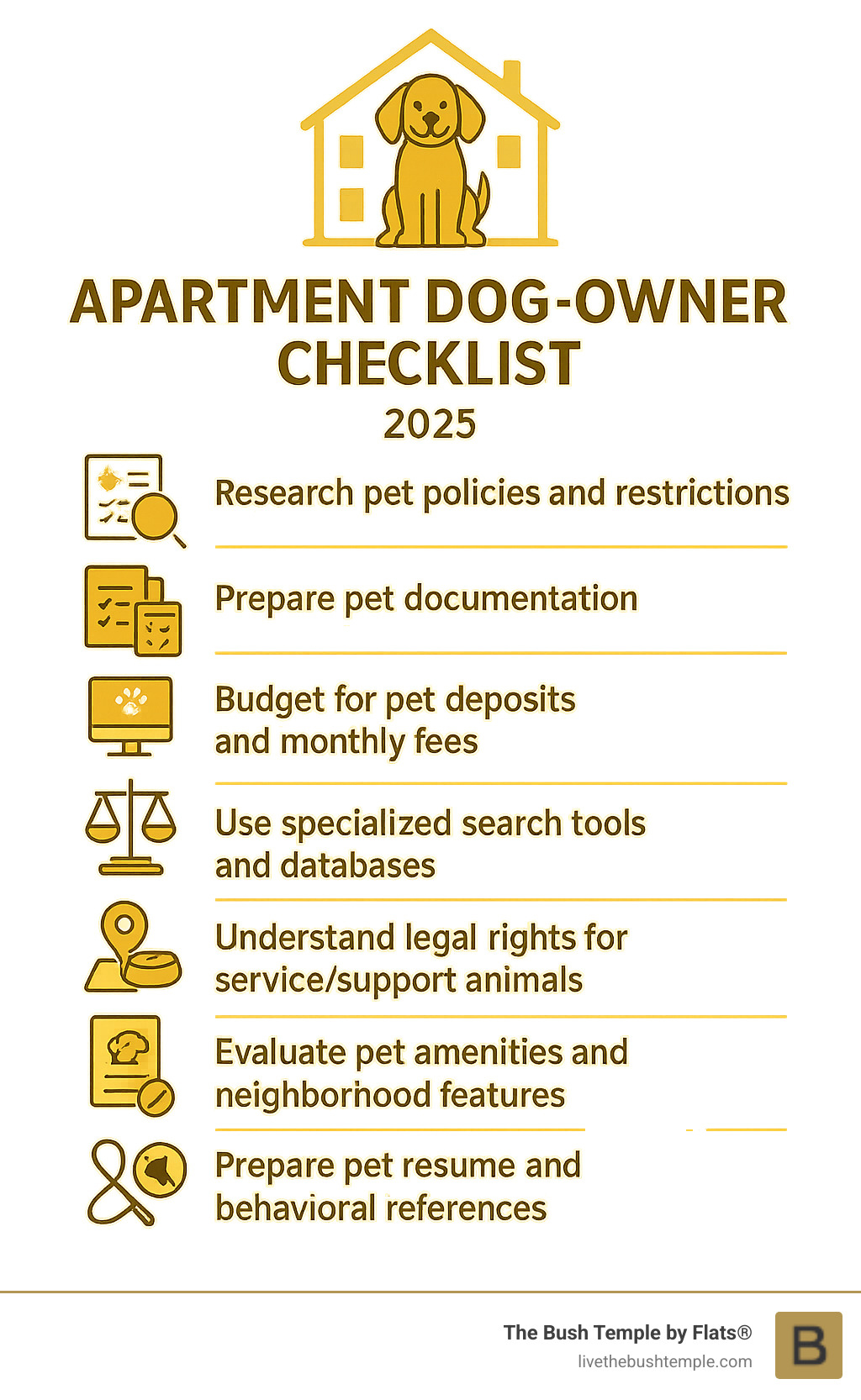
Key takeaways for successful apartment hunting with dogs include researching pet policies thoroughly, preparing comprehensive pet documentation, and understanding additional pet-related costs. Understanding legal protections for service dogs and emotional support animals ensures proper treatment during the housing search.
Respectful communication with property managers and neighbors creates positive relationships that benefit everyone. Demonstrating responsible pet ownership through training, proper care, and community consideration helps maintain access to pet-friendly housing.
Knowing rights under federal law protects against discrimination while understanding property-specific policies prevents surprises. The combination of legal knowledge and practical preparation creates the strongest foundation for successful apartment hunting.
Choosing amenities that fit lifestyle needs makes apartment living enjoyable for both dogs and their owners. Properties with thoughtful pet amenities, convenient exercise options, and pet-friendly community features provide the best long-term living experiences.
FLATS® at The Bush Temple exemplifies how luxury apartment living can successfully accommodate pet-owning families. Located in River North Chicago, this property combines historic charm with modern amenities designed for urban pet owners.
For those considering River North living, Schedule a Tour provides an opportunity to see first-hand how luxury apartments can welcome both residents and their beloved dogs.
The journey to finding the perfect dog-friendly apartment may require time and effort, but the reward of a home that truly welcomes the whole family makes every step worthwhile. With proper preparation and knowledge, dog owners can find apartments that don't just allow pets but celebrate them as valued family members.