

Why Finding Apartments No Breed Restrictions Changes Everything for Pet Owners
Apartments no breed restrictions are rental properties that welcome all dog breeds without discrimination based on breed type, mix, or perceived risk factors. Unlike traditional rentals that ban specific breeds like pit bulls, German shepherds, or rottweilers, these communities evaluate pets based on individual behavior and responsible ownership rather than breed stereotypes.
Quick Answer: What You Need to Know
- No breed restrictions = All dog breeds welcome (up to 2 pets maximum)
- Still have policies: Weight limits, pet deposits, and behavioral requirements may apply
- Legal protections: Service and emotional support animals are exempt from all breed restrictions
- Search strategies: Use specialized databases, contact private landlords, and ask direct questions about breed policies
- Proof required: Training certificates, vet records, and renter's insurance help secure approval
Finding housing shouldn't force you to choose between your furry family member and your dream apartment. Yet countless responsible pet owners face this exact dilemma every day.
The reality is stark: breed restrictions affect millions of renters across the country. These policies often target specific breeds based on outdated assumptions rather than individual pet behavior. The result? Well-trained, loving dogs get rejected alongside their responsible owners.
But change is happening. Forward-thinking communities recognize that breed doesn't determine behavior. They're creating policies that focus on responsible ownership instead of breed bias. These apartments evaluate pets as individuals - looking at training, health records, and owner responsibility rather than making snap judgments based on appearance.
The shift benefits everyone. Renters gain housing freedom. Communities see reduced pet abandonment. Property managers attract responsible tenants who view their pets as family.
What Does "No Breed Restrictions" Really Mean?
When you see apartments no breed restrictions advertised, it means the rental community welcomes all dog breeds without automatically saying "no" based on breed type alone. These properties don't maintain those dreaded banned breed lists that exclude pit bulls, German shepherds, or rottweilers before even meeting your furry friend.
But here's the important part: no breed restrictions doesn't mean no rules at all. These communities still care about responsible pet ownership - they just evaluate each dog as an individual rather than making assumptions based on breed stereotypes.
Most no-restriction properties still require standard pet documentation like current vaccination records, spay/neuter certificates, and proof of liability insurance coverage. You'll likely encounter pet deposits and monthly pet rent (remember, most places allow up to two pets maximum). Some communities also conduct temperament assessments or pet interviews to meet your dog in person.
The game-changing difference? Your well-trained pit bull mix won't get automatically rejected just because of how he looks. Instead, the leasing team will focus on his behavior, your track record as a responsible owner, and whether you can provide proper care and training.
History of Breed Bans & Why They Persist
Breed restrictions exploded in the 1980s and 1990s, driven largely by insurance industry fears and sensationalized media coverage of dog attacks. Insurance companies started excluding certain breeds from liability coverage, which pushed property managers into a corner - ban these breeds entirely or risk losing insurance protection altogether.
The problem runs deeper than most people realize. Visual breed identification is notoriously unreliable - studies show even veterinarians correctly identify mixed breeds only about 25% of the time. This means countless dogs get banned based on appearance rather than actual genetics or behavior.
Insurance clauses still fuel many restrictions today. Some insurers refuse coverage entirely for properties allowing certain breeds, while others charge significantly higher premiums. Many property managers find it easier to implement blanket bans rather than steer complex insurance requirements.
But change is happening. Progressive insurance companies now offer breed-neutral policies, recognizing that individual behavior matters far more than breed labels. Smart property managers are catching on and updating their policies accordingly.
Commonly Restricted Breeds & Misconceptions
The usual suspects on banned breed lists include pit bull-type dogs (American Pit Bull Terrier, Staffordshire Terrier, Bull Terrier), Rottweilers, German Shepherds, Doberman Pinschers, Chow Chows, Akitas, Huskies and Malamutes, Great Danes, and Mastiffs.
Here's where it gets frustrating: many of these restrictions stem from misconceptions rather than actual data. Take Huskies, for example - they're working dogs bred for endurance and pack cooperation, yet they frequently appear on banned lists because of insurance industry groupings rather than bite statistics.

The reality is much more nuanced. Factors like socialization, training, owner experience, and individual temperament play far bigger roles in determining dog behavior than breed alone. A well-trained, properly socialized dog of any breed can be a wonderful apartment companion, while a poorly trained dog of any breed can cause problems.
Responsible ownership trumps breed labels every time. That's exactly why apartments no breed restrictions focus on you and your pet as individuals rather than making snap judgments based on outdated stereotypes.
Why Some Communities Still Say "No" & How to Change the Conversation
Let's be honest - some property managers still hesitate when it comes to apartments no breed restrictions. But understanding their concerns is the first step to changing their minds.
Most restrictions stem from three main worries. Insurance complications top the list, since some insurers still charge higher premiums or exclude certain breeds entirely. Property damage fears come next - managers worry about scratched floors or chewed door frames. Finally, there's the liability concern - the fear that incidents could lead to lawsuits or insurance claims.
Here's the good news: these concerns are totally addressable. The secret lies in creating a comprehensive pet portfolio that showcases your responsible ownership. Think of it as a resume for your furry family member.
Your portfolio should demonstrate your commitment through current vaccination records and health certificates that show you prioritize preventive care. Include any training certificates - basic obedience classes or Canine Good Citizen certification carry serious weight with landlords. Add references from previous landlords who can vouch for your track record, plus veterinary references that confirm your pet's good health and your responsible ownership.
Don't forget the practical stuff: photos showing your pet's calm demeanor, proof of spay/neuter status, and liability insurance coverage. Many successful renters find that offering additional security measures - like higher pet deposits or agreeing to periodic check-ins - helps seal the deal.
| Policy Type | Typical Requirements | Approval Process | Community Benefits |
|---|---|---|---|
| Breed Restricted | Breed verification, limited options | Automatic rejection for banned breeds | Limited tenant pool, higher vacancy rates |
| No Restrictions | Pet interview, documentation | Individual evaluation | Diverse community, responsible pet owners |
Demonstrating Responsible Ownership to Landlords
The magic happens when you shift the conversation from breed assumptions to individual responsibility. Property managers want tenants who'll care for their units and contribute positively to the community - and that's exactly what responsible pet owners do.
Training achievements speak volumes about your commitment. Canine Good Citizen certification is particularly powerful because it proves your dog can behave appropriately around people and other animals. Even basic obedience certificates show you're invested in ongoing training.
Your veterinary records tell a story of responsible care. Regular check-ups, current vaccinations, and consistent parasite prevention demonstrate the same attention to detail you'll bring to maintaining your apartment.
Previous landlord references provide the strongest evidence of your track record. When a former property manager confirms you left your unit in excellent condition and your pet never caused issues, it carries more weight than any breed stereotype.
Scientific research on dog temperament consistently shows that individual behavior depends far more on training, socialization, and owner responsibility than breed type. Forward-thinking property managers are catching on to this reality.
Some renters successfully negotiate by offering additional security measures - higher deposits, extra liability coverage, or agreeing to periodic behavioral assessments. These gestures show you understand their concerns and are willing to go the extra mile.
Legal Protections: Service & Emotional Support Animals
The Fair Housing Act provides crucial protections that override breed restrictions entirely. Understanding these rights can open doors that might otherwise stay closed.
Service animals - dogs trained to perform specific tasks for people with disabilities - cannot be excluded based on breed, size, or any other characteristic. Property managers cannot charge pet fees or deposits for legitimate service animals, and breed restrictions simply don't apply.
Emotional support animals receive protection under reasonable accommodation provisions, but the rules are more specific. You need documentation from a licensed mental health professional who can attest to your specific need for emotional support. This isn't just a letter saying pets are nice - it requires a genuine therapeutic relationship.
The key is obtaining legitimate documentation through proper channels. Those online registries you see advertised? They're not legally recognized. You need real documentation from a licensed professional who understands your situation and can speak to your specific needs.
These protections apply to virtually all housing, including properties that typically maintain breed restrictions. However, the documentation must be legitimate and the accommodation must be reasonable - which is why working with qualified professionals matters so much.
Finding Apartments No Breed Restrictions: Step-By-Step Guide

Searching for apartments no breed restrictions requires a strategic approach. Here's our step-by-step process:
Step 1: Use Specialized Search Filters Major rental platforms like Apartment List, Zillow, and HotPads now include pet-friendly filters. Look for options that specifically mention "no breed restrictions" rather than just "pet-friendly."
Step 2: Check Dedicated Databases The My Pit Bull is Family National Database maintains the largest collection of dog-inclusive rentals in the country. These properties either have no breed restrictions or weight limits of 60-70 pounds or higher.
Step 3: Contact Properties Directly Never rely solely on online listings. Call properties directly to confirm current pet policies. Ask specifically: "Do you have any breed restrictions?" and "What is your process for evaluating pets?"
Step 4: Prepare Your Documentation Have your pet portfolio ready before you start serious apartment hunting. This preparation shows professionalism and can expedite the approval process.
Step 5: Schedule Pet Interviews Many no-restriction communities still conduct pet interviews or meet-and-greets. These sessions let property managers evaluate your pet's temperament and your handling skills.
Apartments No Breed Restrictions—Online Resources & Databases
Several online resources specialize in connecting pet owners with inclusive housing options:
MYPITBULLISFAMILY maintains the most comprehensive database of dog-inclusive rentals nationwide. Their listings include properties with no breed restrictions as well as those with generous weight limits.
Craigslist Give yourself time can be particularly effective for finding private landlords who may be more flexible than large management companies. Post "Housing Wanted" ads that mention your pet upfront to attract pet-friendly landlords.
Rental platform filters on sites like Apartment List, Zillow, and Rent.com now include specific breed-friendly options. However, always verify policies directly with properties since online information may be outdated.
Social media groups for your city often maintain crowdsourced lists of pet-friendly housing. Search for groups like "[Your City] Pet Friendly Rentals" or "[Your City] Dog Owners."
Apartments No Breed Restrictions—How to Identify Inclusive Communities
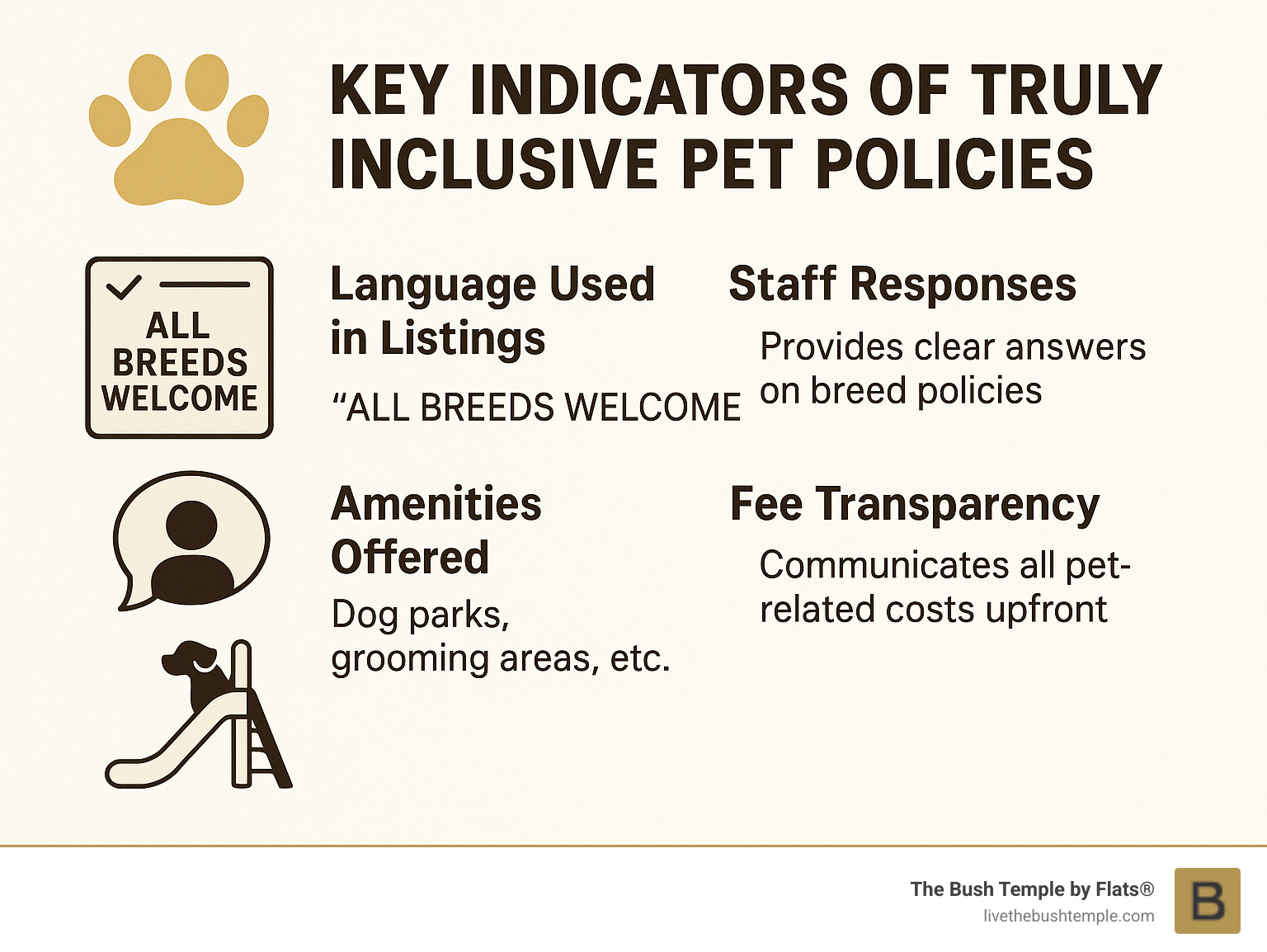
Truly inclusive communities share certain characteristics that you can identify during your search:
Language matters: Look for properties that use phrases like "all breeds welcome" or "no breed discrimination" rather than just "pet-friendly." The latter often still includes breed restrictions.
Pet amenities indicate commitment: Communities with dog parks, pet washing stations, or pet agility areas typically have more comprehensive pet-friendly policies.
Staff knowledge: When you call, knowledgeable staff should be able to immediately answer questions about breed policies without needing to check with management.
Transparent fee structures: Inclusive communities clearly communicate all pet-related fees upfront rather than surprising you with breed-specific charges later.
Apartments No Breed Restrictions—Local Search Tips
Target independent landlords: Private property owners often have more flexibility than large management companies. They can make individual decisions about pets based on personal interactions rather than corporate policies.
Join local Facebook groups: Many cities have Facebook groups specifically for pet owners seeking housing. These groups often share real-time information about available rentals and landlord experiences.
More info about FAQs - When researching specific properties, check their FAQ sections for detailed pet policy information.
Schedule meet-and-greets: Suggest meeting with potential landlords along with your pet. This personal interaction often overcomes breed bias more effectively than paperwork alone.
Network with local pet professionals: Veterinarians, dog trainers, and pet store owners often know which landlords in the area are pet-friendly.
Benefits of Living in a No-Restriction Community
Living in apartments no breed restrictions transforms the entire rental experience for pet owners. Instead of constantly worrying about breed discrimination or hiding your dog's heritage, you can focus on what really matters - building a happy home for you and your furry family member.
The relief is immediate and profound. No more anxious phone calls where you hold your breath while describing your pet. No more disappointing rejections based on assumptions rather than your dog's actual behavior. You can apartment hunt with confidence, knowing your well-trained companion won't be judged by outdated stereotypes.
Community atmosphere changes dramatically in breed-inclusive buildings. When properties welcome all pets equally, they attract residents who truly understand the human-animal bond. These are people who see pets as family members, not inconveniences. The result? Neighbors who actually want to meet your dog and share stories about their own pets.
Your dog benefits tremendously too. Pet happiness flourishes when dogs can socialize with diverse groups of other dogs without artificial barriers. Instead of segregated communities where only certain breeds are welcome, your pup gets to interact with the full spectrum of canine personalities and sizes.
Long-term stability becomes possible when you don't have to worry about breed restrictions during lease renewals or future moves. This security matters deeply - both for your peace of mind and your pet's emotional well-being. Dogs thrive on routine and consistency, which becomes much easier to maintain when housing discrimination isn't constantly threatening your living situation.
The financial benefits extend beyond just avoiding rehoming costs. You won't need expensive temporary boarding while searching for pet-friendly housing. You won't face the heartbreaking choice between your dream apartment and your beloved companion.

Positive Impact on Communities & Animal Welfare
The ripple effects of breed-inclusive housing policies reach far beyond individual apartments. These communities become catalysts for positive change throughout entire neighborhoods and cities.
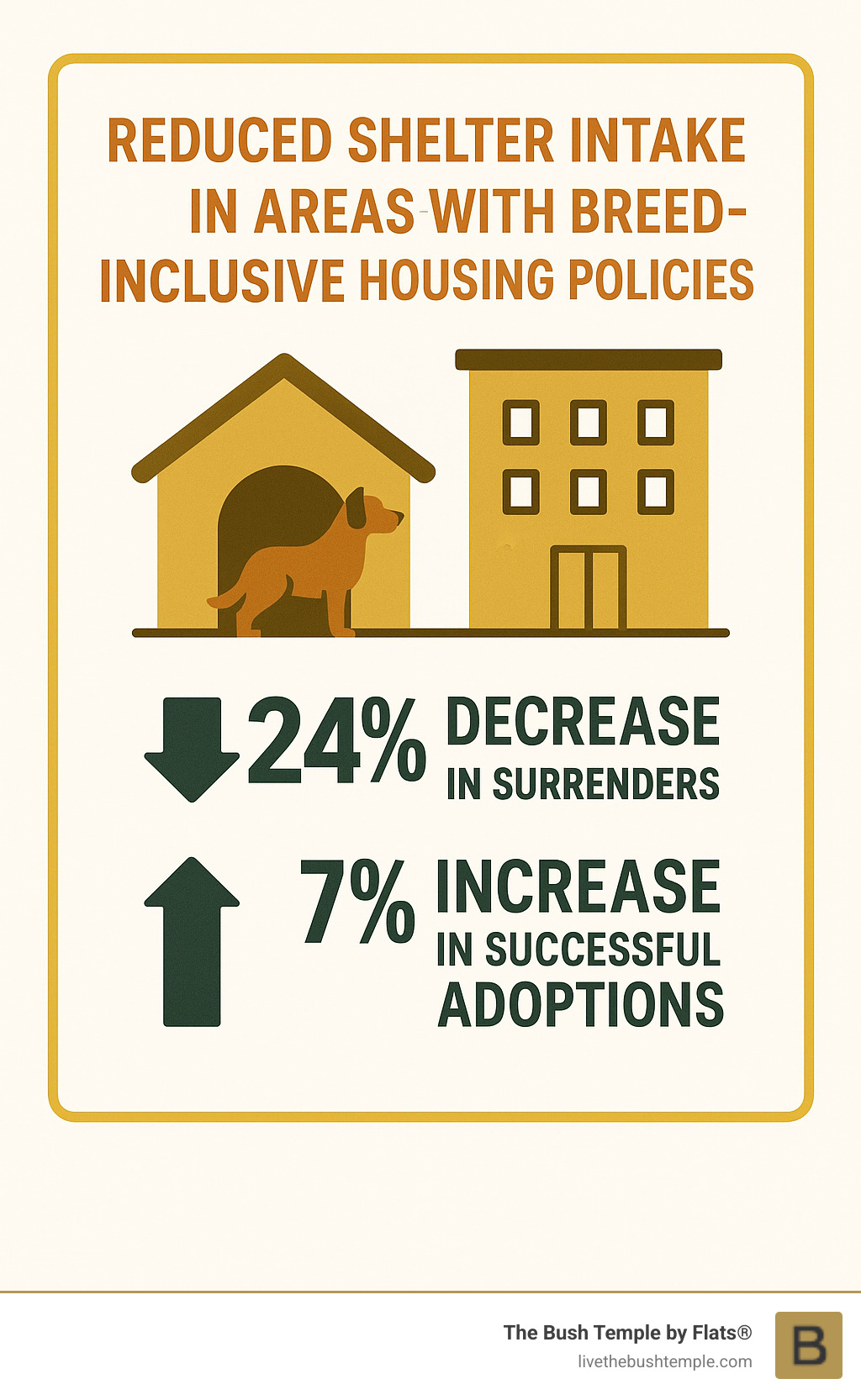
Reduced shelter surrenders represent one of the most meaningful impacts. When people can find housing with their pets, they don't face the devastating choice between keeping their home and keeping their dog. This single factor prevents thousands of unnecessary shelter surrenders each year.
The data tells a compelling story. Areas with more apartments no breed restrictions see dramatic decreases in shelter intake rates, particularly for breeds that traditionally face housing discrimination. These aren't just statistics - they represent families staying together and dogs avoiding the trauma of abandonment.
Adoption rates increase significantly when potential pet parents know housing options exist. People considering adding a furry family member feel more confident moving forward when they're not worried about future housing limitations. This creates a positive cycle where more pets find loving homes.
Community engagement flourishes in breed-inclusive buildings. Shared dog parks, pet washing stations, and informal dog walking groups create natural opportunities for neighbors to connect. These interactions build stronger, more cohesive communities where residents actually know and care about each other.
Property managers benefit too, though they might not realize it initially. Pet-owning tenants tend to stay longer in their units, reducing costly turnover and vacancy periods. They also tend to be more invested in their living spaces, treating their apartments as true homes rather than temporary stops.
The economic benefits extend to local businesses as well. Pet-owning residents support veterinary clinics, pet stores, grooming services, and dog-friendly restaurants in their neighborhoods. This economic activity strengthens local communities and creates more vibrant, walkable neighborhoods.
The change goes deeper than housing policy - it represents a shift toward more compassionate, evidence-based decision making. Communities that accept breed-inclusive policies demonstrate their commitment to judging individuals rather than making assumptions based on appearance or stereotypes.
Frequently Asked Questions about apartments no breed restrictions
What fees should I expect even in a no-restriction building?
Even when you find apartments no breed restrictions, you'll still encounter standard pet-related costs - they just won't vary based on your dog's breed. Think of these fees as investments in maintaining pet-friendly communities rather than penalties.
Pet deposits typically fall between $250-$400 per pet, and many are refundable when you move out (assuming no damage beyond normal wear). Some properties prefer one-time non-refundable fees instead, which can actually work out better if you're planning a long-term stay.
You'll also see monthly pet rent ranging from $15-$35 per pet. This covers the extra maintenance needed for common areas where pets spend time - think additional landscaping care and more frequent cleaning of lobbies and hallways.
Renter's insurance with liability coverage becomes especially important when you have pets. Most properties require coverage of $300,000 or higher, which typically costs around $300 annually. This protects both you and your landlord if your pet accidentally causes injury or property damage.
The refreshing part about no-restriction communities? You won't face surprise breed-specific surcharges or hidden fees that some properties spring on owners of certain dog types.
How can I prove my dog is well-behaved?
Documentation tells your pet's story better than words ever could. Building a comprehensive portfolio shows property managers that you're serious about responsible ownership.
Canine Good Citizen certification carries tremendous weight with landlords because it demonstrates your dog's ability to behave appropriately around strangers, other dogs, and in public settings. The American Kennel Club program tests ten essential skills that translate directly to apartment living.
Training certificates from obedience schools, puppy classes, or specialized programs show ongoing commitment to your pet's development. Even basic completion certificates prove you've invested time and effort in proper training.
Your veterinarian can provide references confirming your pet's health status, vaccination compliance, and temperament during office visits. Vets see hundreds of dogs, so their professional assessment of your pet's behavior carries significant credibility.
If you've rented with pets before, previous landlord references offer third-party validation of your track record. Ask former landlords to confirm in writing that your pet never caused problems, damage, or complaints from neighbors.
Consider creating a photo portfolio showing your dog in various situations - relaxing at home, walking calmly on leash, interacting appropriately with other dogs. These images help property managers see your pet as an individual rather than a breed stereotype.
Are there weight limits in "no breed restriction" apartments?
Here's where things get interesting - many apartments no breed restrictions still maintain weight limits, though they're typically much more generous than breed-restricted properties.
Weight limits in inclusive communities usually range from 60-85 pounds, significantly higher than restricted properties that often cap pets at 25-40 pounds. This means breeds like Golden Retrievers, German Shepherds, and even some larger mixed breeds can qualify.
Most properties maintain a two-pet maximum regardless of size or breed. This policy helps maintain community harmony while still allowing pet owners flexibility in their choices.
Some forward-thinking communities take individual evaluation approaches rather than applying blanket weight restrictions. They might consider factors like your pet's energy level, your apartment size, and your experience with larger dogs.
Policies vary significantly between properties, even within the same management company. One building might welcome 80-pound dogs while their sister property caps at 60 pounds. This variance makes it crucial to confirm specific policies during your initial inquiry.
The key is asking directly about weight limits when you first contact a property. Some communities advertise "no breed restrictions" but maintain weight limits that could affect larger breeds - better to know upfront than find limitations later in the application process.
Conclusion
Finding apartments no breed restrictions transforms the entire rental experience from a stressful search into an exciting opportunity to find your perfect home. These communities understand that your four-legged family member deserves the same consideration as any other part of your household.
The rental landscape continues evolving in positive directions. Property managers increasingly recognize that responsible pet ownership matters more than breed assumptions. They're finding that pet-loving tenants often make the most committed, long-term residents who truly care about their community.
Your success in finding the right home depends on preparation and presentation. That comprehensive pet portfolio we discussed - complete with training certificates, veterinary records, and glowing references - becomes your secret weapon. Combined with liability insurance and proactive communication, these tools open doors to communities that celebrate responsible pet ownership.
The future looks brighter for pet families everywhere. Legal protections continue expanding. Insurance companies offer more breed-neutral policies. Most importantly, communities are learning that judging pets as individuals creates happier, more inclusive neighborhoods for everyone.
At The Bush Temple by Flats®, we've always believed that luxury living shouldn't require compromising on family - and that includes your furry family members. Our River North location puts you at the heart of Chicago's most vibrant neighborhood, where sophisticated urban living meets genuine pet-friendly policies.
We understand the relief that comes with finding a community that truly welcomes your entire family. No more hiding your dog's breed. No more worrying about lease renewals. Just the peace of mind that comes with knowing you've found a place where both you and your pet can thrive.
The movement toward inclusive housing policies gains momentum every day. By choosing communities that evaluate pets fairly, we're building a future where responsible pet ownership is celebrated rather than penalized. Your choice to seek apartments no breed restrictions contributes to this positive change.
More info about River North pet-friendly apartments - Find how luxury and pet freedom come together in one of Chicago's most exciting neighborhoods.