

River North, Chicago: A Neighborhood Worth Exploring
A chicago river north map reveals one of the city's most dynamic and well-located neighborhoods — sitting just north of the Chicago River, south of Division Street, and west of Wabash Avenue.
Here's a quick orientation for anyone exploring River North:
| Feature | Detail |
|---|---|
| Location | Near North Side, Chicago, IL |
| Coordinates | 41.89241° N, 87.6326° W |
| Area | 0.35 sq miles / 224.45 acres |
| Perimeter | 2.5 miles / 13,165 feet |
| Borders | Chicago River (S), Division St (N), Wabash Ave (E) |
| Known For | Nightlife, art galleries, dining, high-rise living |
| Transit | Brown, Purple, and Red CTA Lines |
River North sits at the center of Chicago's energy. It's not technically part of "downtown" (The Loop), but it feels just as connected — if not more vibrant.
The neighborhood has gone through a remarkable transformation. What was once called "Smokey Hollow" — a gritty industrial zone packed with factories and rail yards — is now home to Michelin-starred restaurants, world-class art galleries, and some of Chicago's most sought-after residential buildings.
For urban professionals who want walkability, culture, and convenience all in one place, River North consistently delivers.
Navigating the Chicago River North Map: Boundaries and Geography

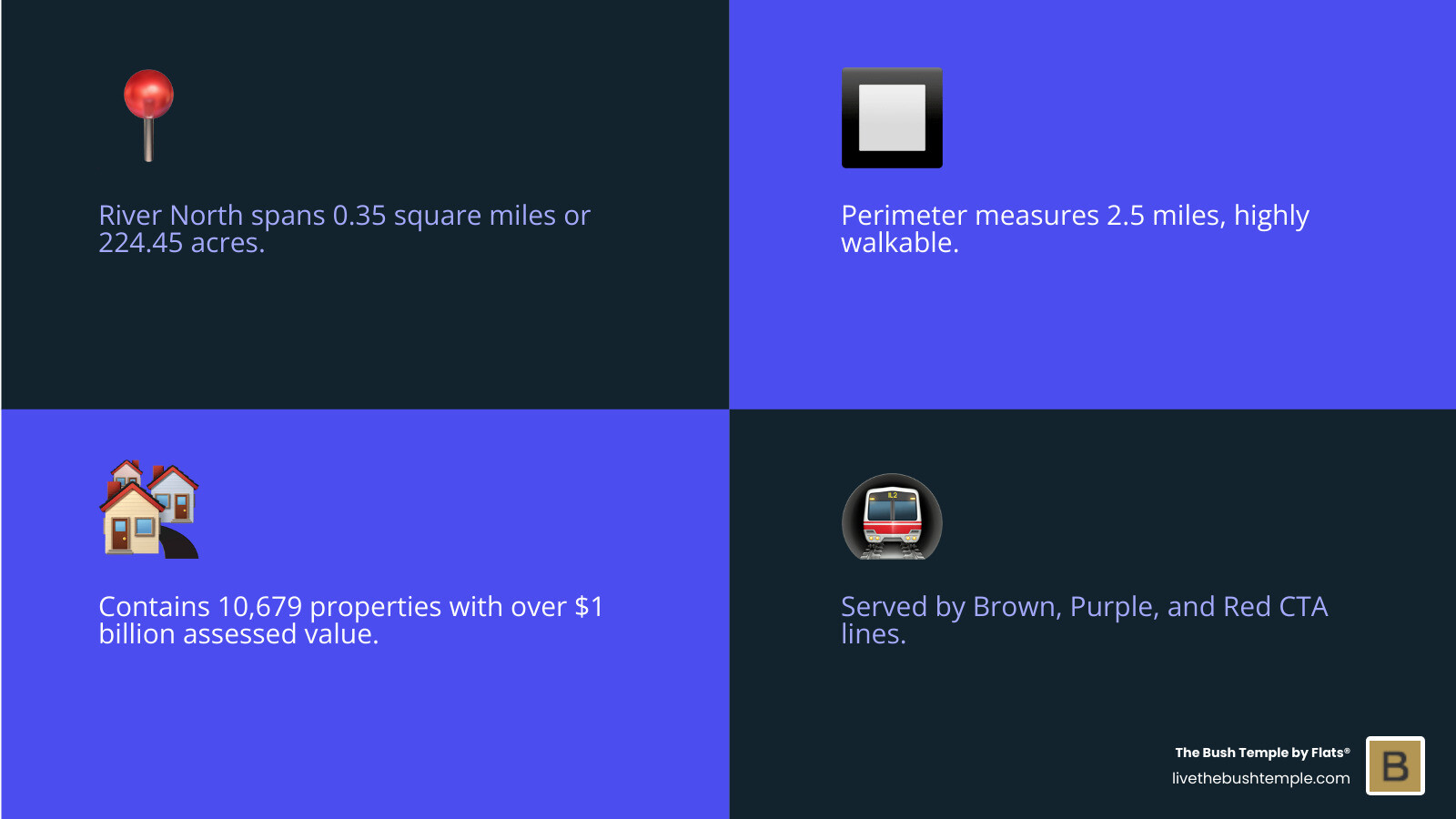
Understanding the layout of River North is essential for anyone looking to live or invest in the area. Despite its massive reputation as a global destination for art and nightlife, the neighborhood is geographically compact, covering approximately 0.35 square miles or 224.45 acres. The perimeter length of the neighborhood is roughly 2.5 miles, making it an incredibly walkable district where most major attractions are within a 15-to-20-minute stroll of one another.
The density of this area is reflected in its property data. There are 10,679 properties packed into this relatively small footprint, showcasing the vertical nature of the neighborhood. While many Chicago neighborhoods are defined by sprawling bungalows, River North is defined by height and historical adaptive reuse.
| Metric | River North Data |
|---|---|
| Total Area | 224.45 Acres |
| Perimeter | 13,165.2 Feet |
| Total Properties | 10,679 |
| Vacant Properties | 17 |
| Aggregate Assessed Value (2023) | $1,031,897,955 |
For those interested in a deeper dive into the community layout, the River North Neighborhood Chicago guide provides a closer look at how these blocks are organized.
Defining Boundaries on the Chicago River North Map
Precise boundaries are often a point of confusion for visitors, but a standard chicago river north map defines the area clearly. The southern border is the Chicago River, providing the neighborhood with its iconic waterfront views and the famous Riverwalk. To the north, the neighborhood extends to Division Street. The eastern boundary is Wabash Avenue, which separates River North from the Magnificent Mile and Streeterville. To the west, the neighborhood is bounded by the North Branch of the Chicago River.
Geographically, the center of the neighborhood is located at coordinates 41.89241° N, 87.6326° W. According to Wikipedia More on Wikipedia, these boundaries place the neighborhood firmly within the Near North Side community area, acting as a gateway between the central business district and the residential neighborhoods further north.
Surrounding Neighborhoods and Overlaps
River North does not exist in a vacuum; it is surrounded by some of the most famous districts in the world. To the east lies Streeterville and the Magnificent Mile, Chicago’s premier shopping destination. Directly to the north is the Gold Coast, known for its historic mansions and quiet, tree-lined streets. The transition between River North’s high-energy nightlife and the Gold Coast’s refined residential atmosphere is one of the most interesting geographic shifts in the city.
To the south, across the river, is The Loop, Chicago's official "downtown" and financial heart. To the west, across the North Branch, lies the West Loop, another former industrial area that has mirrored River North’s transformation into a culinary and tech hub. Because these neighborhoods are so close, River North often serves as the "home base" for those who work in The Loop but want a more active social life after hours.
The Historical Transformation: From Smokey Hollow to Urban Chic
The polished glass towers seen on a chicago river north map today stand in stark contrast to the neighborhood’s gritty beginnings. In the late 19th and early 20th centuries, the area was known as "Smokey Hollow." The name was literal: the high concentration of factories, forges, and coal-fired rail yards produced so much smoke that it often blocked out the sunlight.
During this era, River North was a massive transportation hub. Its proximity to the river made it ideal for shipping, and railroad tracks crisscrossed the streets to service warehouses like the Merchandise Mart and Montgomery Ward. During Prohibition, the neighborhood took on a darker character as a center for bootlegging operations. Notable figures like gangster Dean O'Banion operated out of a flower shop front located across from Holy Name Cathedral, making the area a focal point for the city's infamous "North Side Gang."
The neighborhood faced a period of significant decline in the 1960s and 70s, becoming a "skid row" area dominated by vacant warehouses. The turning point came in 1974 when real estate developer Albert Friedman coined the name "River North" as part of a marketing effort to attract new tenants to the abandoned industrial spaces. This rebranding paved the way for the River North Gallery District fire in 1989, an event that, while tragic, eventually led to further modernization and development of the district.
Evolution of the Gallery District
By the 1980s, River North had successfully transitioned into a hub for the arts. The large, open floor plans and high ceilings of the old warehouses were perfect for art studios and galleries. At its peak, River North hosted the largest concentration of art galleries in the United States outside of Manhattan.
This artistic foundation attracted a "design district" of high-end showrooms for furniture and interior design, many of which still call the neighborhood home today. As the galleries moved in, gentrification followed. The 1990s and early 2000s saw a massive boom in nightlife and residential construction. Hubbard Street became a legendary destination for dining and bars, while the skyline began to fill with luxury high-rises. Today, the neighborhood maintains its creative soul through its architecture and design firms, even as it has become one of the city's most upscale residential enclaves.
Real Estate Landscape and Social Infrastructure
The real estate market in River North is one of the most robust in Chicago. With over 10,600 individual properties, the area is a mix of historic lofts and ultra-modern skyscrapers. The economic value of the neighborhood is staggering; in 2023, the aggregate assessed value of River North properties exceeded $1.03 billion, generating more than $261 million in tax revenue for the city.
For those looking to move into the heart of the action, Luxury Apartments River North Chicago offer a variety of living styles, from converted historic buildings to sleek new constructions. The neighborhood's appeal lies in its "live-work-play" balance, where residents can walk to their office in the Merchandise Mart and then meet friends at a Michelin-starred restaurant just blocks away.
Residential Opportunities and Zoning
Residential options in River North are diverse. While high-rise living is the dominant form, there are also River North Chicago Townhomes tucked away in quieter pockets of the neighborhood. The city has implemented various zoning changes to encourage Transit-Oriented Development (TOD), which allows for higher density near CTA stations.
There are also specific development incentives in place, such as Tax Increment Financing (TIF) districts, which have helped fund infrastructure improvements and public spaces. For those searching for a new home, the market for River North Apartments for Rent remains competitive, driven by the neighborhood's status as a top-tier destination for young professionals and urbanites.
Local Amenities and Lifestyle
Life in River North is defined by convenience. The neighborhood is anchored by the Merchandise Mart, a massive landmark that serves as a hub for tech companies and design firms. Beyond work, the social infrastructure is world-class. Residents have access to:
- Dining: From high-end steakhouses and Michelin-starred establishments to trendy sushi spots and casual coffee shops.
- Fitness: Several premium fitness centers and gyms are scattered throughout the neighborhood.
- Shopping: High-end boutiques and the nearby Magnificent Mile offer endless retail options.
- Pet Living: The neighborhood is generally pet-friendly, though most apartment buildings, including those managed by FLATS®, typically have a maximum limit of two pets per unit.
Connectivity and Recreation Along the Water
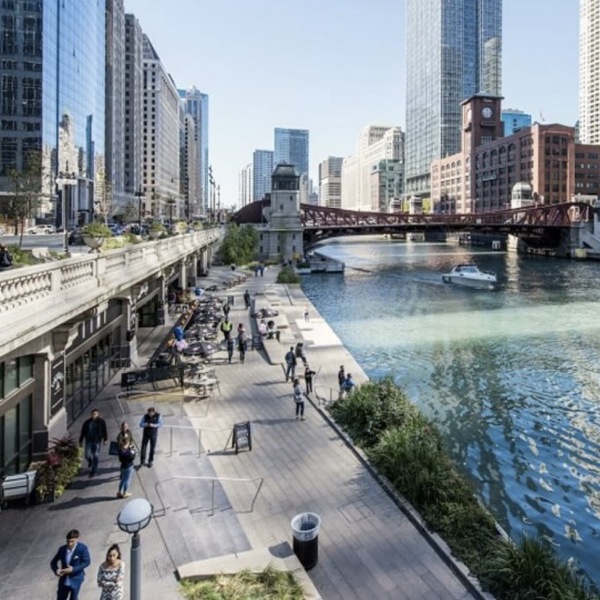
One of the greatest benefits of the River North location is its connection to the Chicago River. The Riverwalk, located along the southern edge of the neighborhood, has become one of the city's premier recreational assets. It offers a continuous path for walking and running, as well as access to waterfront dining and public art installations.
For those interested in exploring the water itself, the North Branch of the river offers unique recreational opportunities. You can view the Riverwalk Map to find entry points for kayaking and boat tours. The river is no longer just a commercial highway; it is a vital part of the neighborhood’s lifestyle.
Exploring the North Branch via the Chicago River North Map
The North Branch of the Chicago River provides a different vibe than the bustling Main Stem. Here, you can find more green space and urban recreation spots. Organizations like Great Rivers Chicago have worked to create interactive mapping tools that highlight biking trails and walking tours along the river’s edge.
Water taxis are a popular and scenic way to commute or explore, connecting River North to the West Loop and Chinatown. These taxis offer a unique perspective of the city’s architecture that you simply can't get from the street level.
Public Transportation and CTA Access
River North is one of the most well-connected neighborhoods in Chicago. A chicago river north map shows several key CTA "L" stations that provide easy access to the rest of the city:
- The Brown and Purple Lines: Stations at Merchandise Mart and Chicago Avenue serve the heart of the neighborhood.
- The Red Line: The Grand and Chicago stations provide 24/7 access to the city’s most traveled transit artery.
In addition to the "L," the neighborhood is served by numerous bus routes and several Divvy bike-share stations, making it easy to get around without a car. The proximity to major transit hubs means that commuting to almost any part of the city is quick and efficient.
Frequently Asked Questions about River North
What are the exact boundaries of River North?
River North is bounded by the Chicago River to the south, Division Street to the north, Wabash Avenue to the east, and the North Branch of the Chicago River to the west.
Is River North considered part of downtown Chicago?
While it is immediately adjacent to The Loop (the official downtown), River North is technically part of the "Near North Side." However, in common conversation, many people include River North when referring to the broader "downtown" area because of its density and activity.
What is River North best known for today?
Today, River North is famous for its massive concentration of art galleries, its vibrant nightlife scene (particularly around Hubbard Street), world-class dining, and the iconic Merchandise Mart.
Conclusion
River North is a neighborhood that perfectly captures the spirit of Chicago — a place where industrial history meets modern luxury. From its days as "Smokey Hollow" to its current status as a premier hub for art, design, and high-rise living, it continues to evolve. Whether you are navigating the chicago river north map to find the best new restaurant or looking for a place to call home, the energy of this district is undeniable.
For those who want to experience this lifestyle firsthand, The Bush Temple by FLATS® offers a unique living experience on the border of River North and the Gold Coast, combining historic charm with modern amenities. Explore the River North Neighborhood today and see why it remains one of the most desirable corners of the city.