

What Makes River North District Chicago One of the City's Most Vibrant Neighborhoods
River North district Chicago is a dynamic, centrally located neighborhood just north of the Chicago River, bordered by the Magnificent Mile to the east and the Gold Coast to the north.
Here's a quick look at what defines River North:
| Category | Highlights |
|---|---|
| Location | North of the Chicago River, south of Division St, west of Wabash Ave |
| Known For | Art galleries, nightlife, dining, design showrooms |
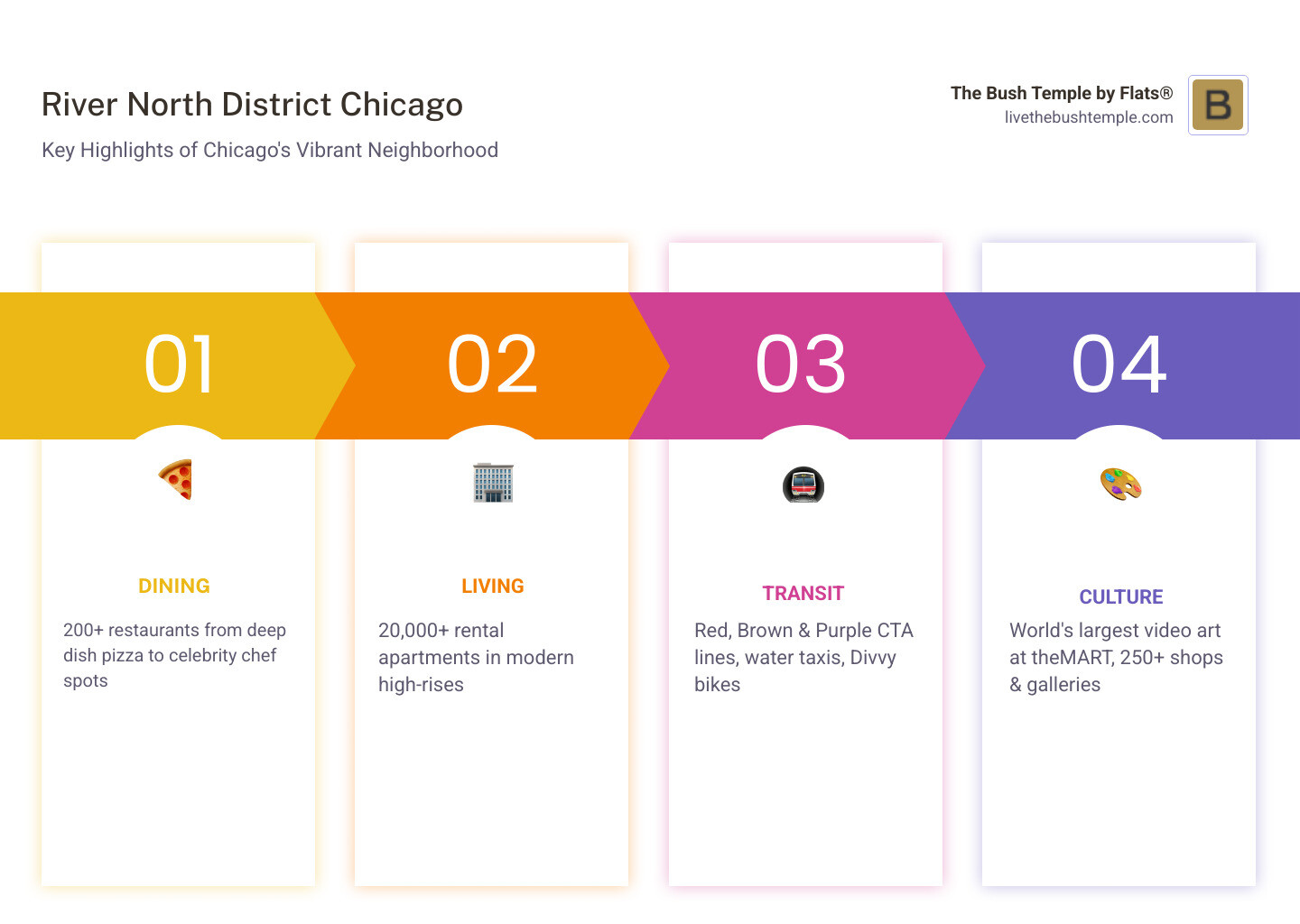
| Dining | 200+ restaurants, from deep dish pizza to celebrity chef spots |
| Living | 20,000+ rental apartments, mostly modern high-rises |
| Transit | Red, Brown & Purple CTA lines; water taxis; Divvy bikes |
| Shopping | 250+ retail and shopping locations |
| Culture | World's largest video projection art installation at theMART |
River North has a rare dual personality. By day, it's a hub for art, design, and culture — galleries and studios tucked inside converted warehouses. By night, it shifts into one of Chicago's most energetic dining and nightlife destinations.
It wasn't always this way. The area was once an industrial zone known as "Smokey Hollow," where factory smoke was so thick it blocked out the sun. Today, it's home to over 3,200 office tenants, world-class restaurants, and some of the most sought-after urban apartments in the city.
For urban professionals who want to live close to everything — work, culture, food, and transit — River North consistently ranks as one of Chicago's most desirable neighborhoods.
The Evolution of the River North District Chicago
The story of the river north district chicago is one of the most dramatic urban transformations in the United States. Long before it was a destination for luxury high-rises and high-end sushi, this area served as the industrial engine of the city. In the early 20th century, the neighborhood earned the nickname "Smokey Hollow." The name was literal; the high concentration of factories, forges, and coal bins produced smoke so dense that it frequently obscured the sunlight.
During this industrial era, the district was a massive transportation and storage hub. Warehouses like the one formerly owned by Montgomery Ward dominated the skyline. The neighborhood was also home to "Little Sicily," a vibrant Italian community centered around the Assumption Parish, the first Italian Roman Catholic Church in Chicago.
As the decades passed, the area faced challenges. By the 1960s and 70s, many of the industrial tenants had moved away, leaving behind gritty streets and vacant warehouses. During the Prohibition era, the district gained a different kind of notoriety as a hub for bootlegging. One famous anecdote involves gangster Dean O’Banion, who operated a flower shop in the neighborhood that served as a front for the North Side Gang until his murder there in 1924.
The turning point for the river north district chicago came in 1974. Real estate developer Albert Friedman began rebranding the area, which many then considered a "skid row." Friedman coined the name "River North" to attract new tenants and businesses. The strategy worked. Artists began moving into the spacious, high-ceilinged warehouses, drawn by the natural light and large floor plans.
This influx of creativity sparked a wave of gentrification that hasn't slowed down since. The River North Business Association was established to support this burgeoning community. Today, the district has shed its "Smokey Hollow" past to become a premier urban center. It now hosts over 3,200 office tenants, ranging from tech startups to creative design firms, all housed within a mix of historic brick-and-timber lofts and sleek glass towers.
A Cultural Epicenter: Art and Design
One of the defining characteristics of the river north district chicago is its status as a global leader in art and design. The neighborhood boasts a concentration of art galleries that was once second only to Manhattan. Much of this creative energy is anchored by theMART (formerly the Merchandise Mart).
Spanning over two city blocks, theMART was the largest building in the world when it opened in 1930. Today, it is a massive hub for the design industry, filled with high-end interior design showrooms and studios. While much of the building serves the trade, it is also a public landmark. Every evening, the building’s massive facade becomes the canvas for Art on theMART, the world’s largest video projection art installation. This breathtaking display projects contemporary digital art across 2.5 acres of the building’s exterior, visible from across the Chicago River.
For those who appreciate history alongside art, the Richard H. Driehaus Museum is a must-visit. Often referred to as Chicago’s "Marble Palace," this restored Gilded Age mansion provides a stunning look at the opulence of the late 19th century. It stands in stark contrast to the modern galleries nearby, offering a bridge between Chicago’s architectural past and its artistic present.
The neighborhood also features the River North Design District (RNDD). This "pocket design community" consists of a network of showrooms and shops that offer everything from luxury lighting and plumbing to high-end rugs and furnishings. The RNDD hosts annual events like the Gallery Walk, which invites the public to explore the intersection of interior design and fine art.
Exploring the River North District Chicago Gallery Scene
The art scene in the river north district chicago is primarily centered in the historic warehouse buildings that characterize the area's west side. These spaces, with their large windows and open layouts, provide the perfect backdrop for contemporary art.
Visitors can spend an entire afternoon wandering from one gallery to the next. Some of the most prominent institutions include:
- Richard Gray Gallery: Known for its international reputation and focus on modern and contemporary masters.
- Catherine Edelman Gallery: A premier destination for contemporary photography.
- Carl Hammer Gallery: This gallery is famous for its focus on "Outsider" art and self-taught genres, as well as the Chicago "Imagist" tradition.
Whether looking for works by emerging local artists or established international names, the gallery district offers a diverse array of mediums and styles. The area's history is still palpable here; a significant fire in 1989 destroyed several gallery buildings, but the community rebuilt, ensuring that River North remained the heart of Chicago’s art world.
Premier Dining and Nightlife Destinations
If the daytime in the river north district chicago belongs to the artists, the nighttime belongs to the foodies and socialites. With over 200 restaurants, the neighborhood offers the highest concentration of dining options in the city.
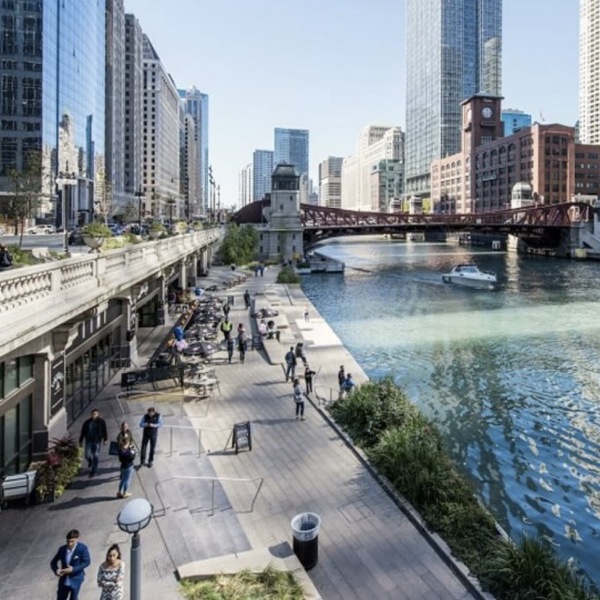
The variety is staggering. For a taste of Chicago history, Pizzeria Uno at 29 E. Ohio and Pizzeria Due at 619 N. Wabash serve what many consider the original deep dish pizza. Those looking for waterfront views can head to the Chicago Riverwalk to find spots like RPM Seafood, a multi-level restaurant offering stunning views of the skyline and fresh catches.
Celebrity chefs have also made River North their home. Rick Bayless’s Frontera Grill has been a neighborhood staple for years, offering authentic Mexican cuisine that has earned national acclaim. For those seeking a unique atmosphere, Three Dots and a Dash provides a speakeasy-style entrance that leads to a tropical tiki paradise, complete with craft cocktails and Polynesian-inspired bites.
The nightlife scene is centered largely around Hubbard Street. This area is a mecca for those seeking high-energy dance clubs and trendy bars. However, the neighborhood also offers more soulful entertainment options. The House of Blues is famous for its Sunday Gospel Brunch and live music performances, while the Tortoise Supper Club provides a more sophisticated atmosphere with live jazz and classic cocktails. For a bit of "Rat Pack" nostalgia, the Redhead Piano Bar offers old-school crooning in an intimate setting.
Urban Living and Connectivity
Living in the river north district chicago means being at the center of the action. The neighborhood is home to more than 20,000 rental apartments, the majority of which are located in modern high-rise buildings that offer expansive views of the city and the lake.
The residential experience here is defined by convenience. Most daily essentials, from organic grocery stores like Whole Foods to fitness centers and coffee shops, are within walking distance. For professionals working in the Loop or at major nearby corporations like Google, KPMG, or Deutsche Bank, the commute is often a simple stroll across a bridge.
The district is also highly accommodating to pet owners. Most residential buildings allow for a maximum of two pets, and the neighborhood features several green spaces, such as Ward (A. Montgomery) Park, which includes a dedicated dog-friendly area.
While the area is known for its high-energy lifestyle, different pockets of the neighborhood offer different vibes. The west side of the district, near the river, tends to be slightly quieter and more residential, while the areas closer to State Street and Michigan Avenue are more tourist-heavy and bustling.
Connectivity and Transit in the River North District Chicago
One of the greatest advantages of the river north district chicago is its exceptional connectivity. It is arguably the most accessible neighborhood in Chicago, regardless of how one chooses to travel.
- CTA Trains: The neighborhood is served by three major train lines. The Red Line has stops at Grand and Chicago, providing 24-hour access to the north and south sides. The Brown and Purple Lines stop at the Merchandise Mart and Chicago Avenue, offering scenic "L" rides through the heart of the city.
- Chicago Riverwalk: This 1.25-mile pedestrian path stretches along the south bank of the river, connecting River North to the lakefront and the Loop. It is a favorite for morning jogs or evening strolls.
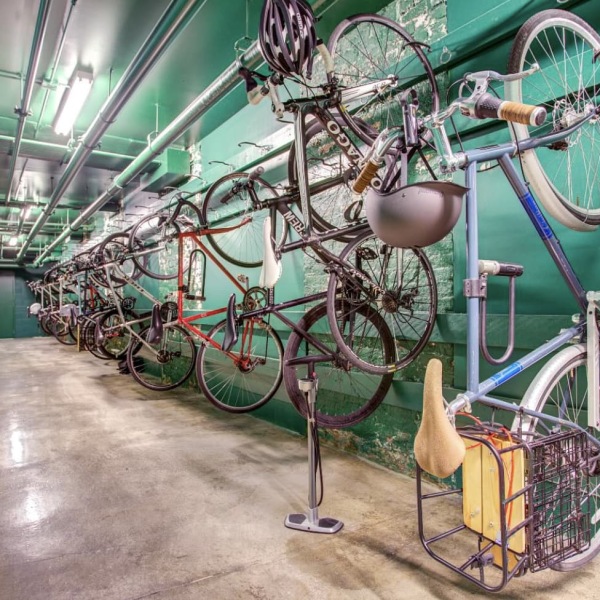
- Alternative Transit: For a unique commute, water taxis operate along the river, connecting the district to the Ogilvie and Union train stations. The neighborhood is also heavily serviced by the Divvy bike-share program and offers quick access to the Kennedy Expressway for those who drive.
With over 3,000 parking spaces available in the district, even those with vehicles find the area manageable, though the high walkability score of the neighborhood means a car is rarely a necessity.
Iconic Landmarks and Neighborhood Comparisons
The skyline of the river north district chicago is a masterclass in architectural history. Perhaps the most recognizable landmarks are the "twin corncobs" of Marina City. Designed by Bertrand Goldberg, these mid-century modern towers were a "city within a city" when they opened, featuring a theater, bowling alley, and even a marina at the base.
Nearby, the 330 N. Wabash skyscraper, designed by the legendary Mies van der Rohe, stands as a testament to modernist principles. And, of course, the Merchandise Mart remains an Art Deco icon that defines the neighborhood’s southern border.
When comparing River North to other neighborhoods, it is often described as the "glamorous older sister" of the Loop. While the Loop is the traditional business center, River North is where the city comes to play. It is frequently compared to Midtown Manhattan because of its density, high-rise living, and abundance of amenities.
Compared to the Gold Coast to the north, River North is more modern and high-energy. While the Gold Coast is known for its historic mansions and quiet prestige, River North embraces new concepts in dining and nightlife. To the west lies the West Loop, another former industrial area turned culinary hotspot. While the West Loop is famous for its "Restaurant Row," River North offers a more central location with better access to the river and the Magnificent Mile.
Frequently Asked Questions about River North
What are the boundaries of the River North District?
The river north district chicago is generally defined as the area north of the main branch of the Chicago River, south of Division Street, and west of Wabash Avenue. It sits directly between the river and the Gold Coast neighborhood.
Is River North a walkable neighborhood?
Yes, River North is considered one of the most walkable neighborhoods in Chicago. Most residents can reach work, dining, and shopping within 10 to 15 minutes on foot. The neighborhood also features the Chicago Riverwalk, a dedicated pedestrian path.
What is the history of the name River North?
The name was created in 1974 by real estate developer Albert Friedman. He used the name to rebrand a then-dilapidated industrial area as a new destination for artists and businesses, successfully transforming its reputation from "Smokey Hollow" to a trendy urban district.
Conclusion
The river north district chicago is a neighborhood that never stands still. From its gritty roots as an industrial powerhouse to its current status as a global hub for art, design, and nightlife, it represents the very best of Chicago’s urban spirit. Whether you are visiting a world-class gallery, dining at a celebrity chef's restaurant, or simply enjoying the view from the Riverwalk, the energy of this district is unmistakable.
For those looking to call this vibrant area home, The Bush Temple by FLATS® offers the perfect blend of historic charm and modern luxury. Situated on the border of River North and the Gold Coast, these apartments provide a unique living experience in a restored historic building. Residents can enjoy premium amenities like a rooftop lounge and a state-of-the-art fitness center, all while being steps away from the best galleries and restaurants the city has to offer.
Explore the River North neighborhood guide to learn more about making your home in the heart of Chicago’s most dynamic district.