

Why Neighborhood Information Chicago Matters for Finding Your Perfect Home
Neighborhood information Chicago is one of the most important things to understand before choosing where to live in the city. Here's a quick snapshot of what you need to know:
Chicago at a Glance:
| Fact | Detail |
|---|---|
| Official community areas | 77 (with a 78th in development) |
| Total area | 234 square miles |
| Population | Nearly 2.7 million residents |
| Lakefront | 26 miles along Lake Michigan |
| Parks | 580 across the city |
| Neighborhoods within community areas | 200+ distinct areas |
Chicago has always been a city defined by its neighborhoods. Each of the city's 77 official community areas has its own personality, history, and vibe — from the jazz clubs of Uptown to the art galleries of River North to the colorful street murals of Pilsen.
But here's the thing: the official map and the way locals talk about neighborhoods don't always match up. Boundaries shift. Areas get rebranded. Sub-neighborhoods emerge. One block might technically be Lakeview, but locals call it Wrigleyville.
For someone choosing where to live, work, or explore, that complexity can feel overwhelming.
This guide cuts through it — covering Chicago's geographic regions, iconic districts, transit options, cultural hubs, and the resources that help you navigate it all.
Understanding the 77 Community Areas and Neighborhood Information Chicago
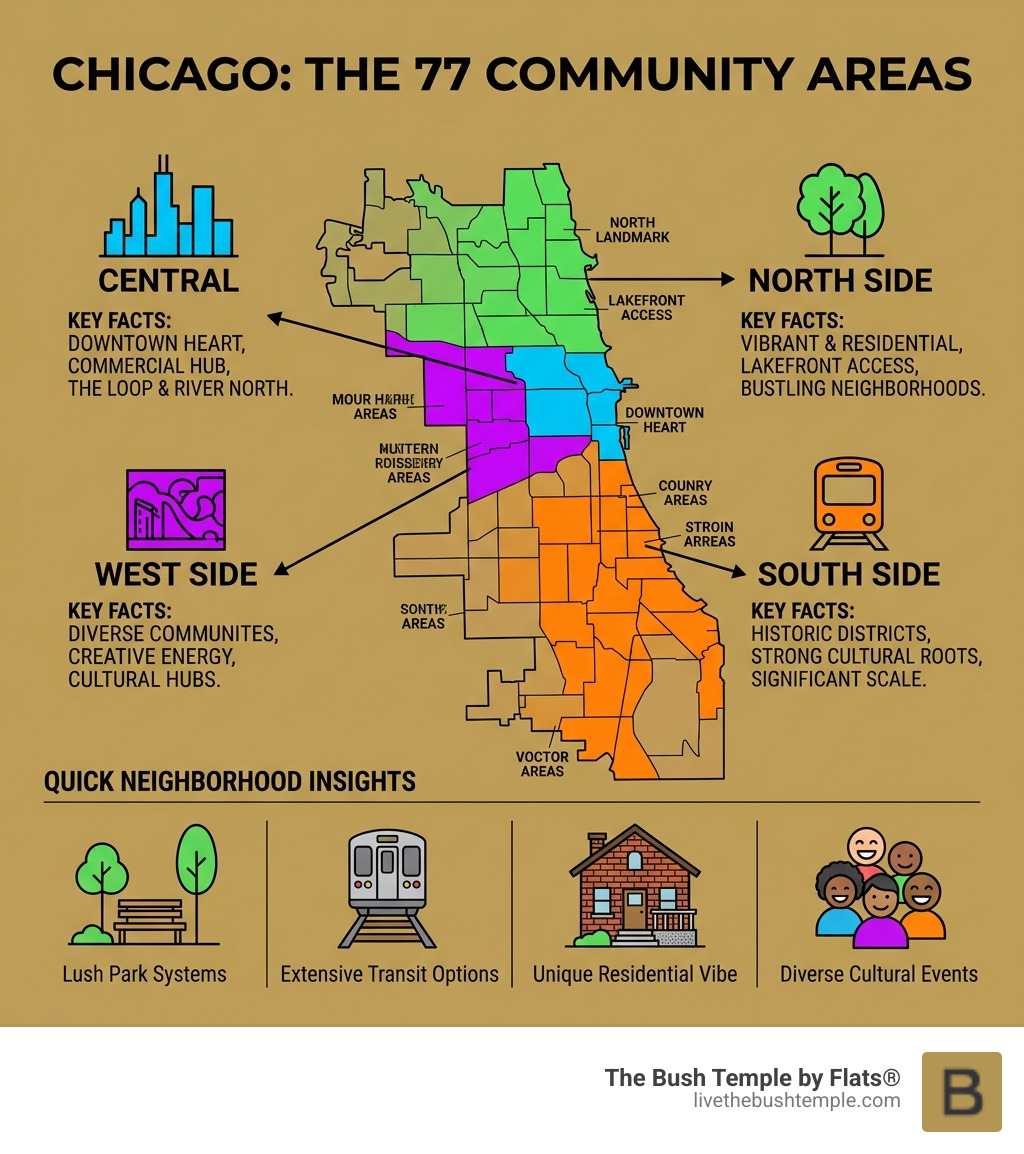
To truly grasp neighborhood information chicago, one must look back to the 1920s. During this era, sociologists at the University of Chicago, including Robert E. Park and Ernest Burgess, sought to divide the city into permanent statistical units. They established 77 community areas based on social and economic patterns, physical boundaries like the Chicago River or rail lines, and local history.

While these 77 areas remain the official standard for the city's data collection and urban planning, they are not necessarily how residents identify their homes. A single community area often contains multiple distinct neighborhoods. For example, the "Near North Side" community area actually encompasses globally recognized neighborhoods like River North, the Gold Coast, and Streeterville. This distinction is vital when researching Chicago Neighborhood Guide For 2026 - Domu because it explains why a resident might say they live in Boystown, even though that name won't appear on an official city community area map.
Mapping Neighborhood Information Chicago Boundaries
Official city data provides a rigid framework, but local perception is fluid. Boundaries are often debated over deep-dish pizza or discussed on back porches. These "micro-neighborhoods" emerge when a small pocket of a community area develops its own unique identity.
Wrigleyville is perhaps the most famous example; it is a micro-neighborhood within the Lakeview community area, defined entirely by its proximity to the historic Friendly Confines of Wrigley Field. Similarly, the Southport Corridor in Lakeview has its own distinct reputation as a boutique shopping and dining destination. Understanding these nuances is a key part of exploring the Neighborhood where you might want to plant roots.
The Evolution of Chicago Districts
Chicago is a living, breathing entity, and its districts are constantly evolving. Areas are frequently rebranded to reflect new developments or shifting demographics. One of the most significant changes on the horizon is the development of "The 78." This 62-acre project located between the South Loop and Chinatown is being hailed as Chicago’s 78th neighborhood.
This massive innovation hub is designed to connect the downtown area with the South Side, focusing on sustainability and high-tech infrastructure. As the city expands, keeping track of the Chicago Zip Code Downtown becomes essential for understanding which areas are becoming the next hubs for tech, dining, and luxury living.
Geographic Regions and Cultural Hubs
Chicago is broadly divided into several major regions: the North Side, West Side, South Side, and the central downtown core. Each region offers a different slice of the Chicago experience, often centered around the city's incredible park system.
The Far North Side is home to Rogers Park, which stands out as one of the most diverse communities in the United States. Here, approximately 40 different languages are spoken, and the neighborhood mirrors the ethnic makeup of the city more closely than almost any other. This global spirit is reflected in the Rogers Park, Chicago dining scene, where you can find authentic cuisine from every corner of the world just steps from the Lake Michigan shoreline.
North Side and Northwest Side Highlights
The North Side is often characterized by its high-energy entertainment districts and scenic lakefront.
- Lakeview: A sprawling area known for the Belmont Theater District and the 1,200-acre outdoor oasis along the water.
- Lincoln Park: Home to one of the nation’s oldest free zoos and miles of lush green space.
- Logan Square: A hub for artists and musicians, known for its historic boulevards and creative energy.
- Wicker Park & Bucktown: These areas are the epicenter of the city's artsy vibe, featuring the "Six Corners" shopping district and the elevated 606 trail.
For those looking for a more laid-back, community-focused atmosphere, North Center, Chicago | Everything You Need to Know highlights why this area is frequently ranked as one of the friendliest in the city. It offers a "village within the city" feel, complete with gastropubs and the North Center Town Square.
West Side and South Side Heritage
The West and South Sides are the heart of Chicago’s cultural heritage. Pilsen is famous for its colorful street art and the National Museum of Mexican Art, while Humboldt Park serves as the center of the city's Puerto Rican community, marked by the massive steel Puerto Rican flags spanning Division Street.
Bronzeville, known as the "Black Metropolis," is a historic center for African American business and culture. Further south, Hyde Park is home to the University of Chicago and the Museum of Science and Industry. For a look at the city's industrial past, the Pullman National Monument showcases the first planned industrial community in the United States. Even in areas like Kilbourn Park Chicago, IL 60641, Neighborhood Profile - NeighborhoodScout , you can find a unique mix of historic bungalows and small apartment buildings that represent the classic Chicago architectural style.
Iconic Districts: River North and the Gold Coast
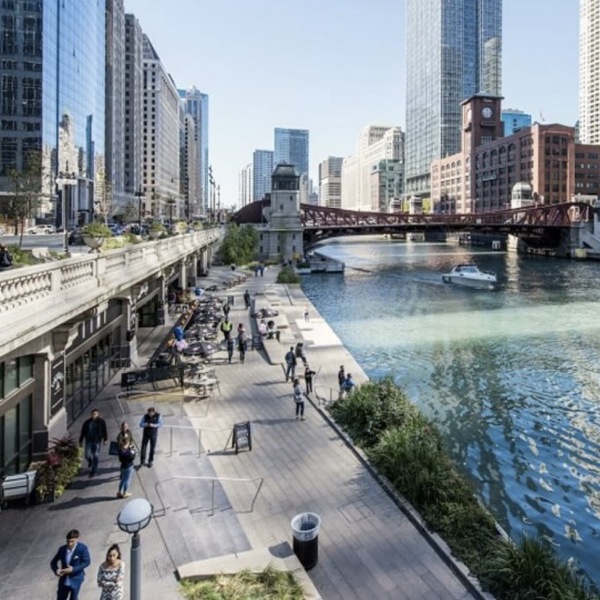
When people think of the quintessential Chicago skyline and urban energy, they are often thinking of River North. This district transformed from an industrial warehouse area into the city’s premier destination for art and nightlife.
River North boasts the highest concentration of art galleries in the country outside of Manhattan. It is also home to Art on theMART, the world’s largest video projection art installation, which lights up the side of the massive Merchandise Mart building. This area is a magnet for those seeking a stylish, urban lifestyle surrounded by River North - Chicago Neighborhoods . Living in a River North Neighborhood Chicago means being at the center of the city's design and culinary world.
Living in the Gold Coast
Just north of River North lies the Gold Coast, one of the most affluent neighborhoods in the country. This area is a beautiful blend of "old money" elegance and modern luxury. The Astor Street District features rows of stunning 19th-century mansions and historic hotels.
The Gold Coast is the place for high-end fashion, with designer boutiques lining Oak Street and luxury residences offering unparalleled views of the lake. Those searching for Chicago Gold Coast Apartments are often drawn to the neighborhood's quiet, tree-lined streets that feel worlds away from the hustle of downtown, despite being just blocks away. It is a place where historic preservation meets modern convenience, as detailed in our Apartments Rent Gold Coast Chicago Guide.
Dining and Nightlife Destinations
The intersection of River North and the Gold Coast is a global dining destination. River North is packed with chef-driven concepts, from Michelin-starred restaurants to legendary deep-dish spots. As the sun sets, the neighborhood pulses with energy from its many rooftop lounges and dance clubs.
The Gold Coast offers a slightly more refined nightlife experience. You can find historic jazz clubs, swanky hotel bars, and some of the city's most celebrated steakhouses. Exploring Gold Coast Chicago Bars is a favorite pastime for locals and visitors alike. For residents in River North Apartments for Rent, this means having world-class entertainment and dining options within walking distance of their front door.
Navigating the City: Transit and Essential Neighborhood Information Chicago
Chicago’s "L" train system is the lifeblood of the city, making it possible to explore various neighborhoods without a car. The Red Line runs 24/7, connecting the North and South Sides through the downtown subway. The Brown Line offers a scenic elevated loop through River North and up to Lincoln Square, while the Blue Line provides a direct link between O'Hare International Airport and the West Side.
The city is also highly ranked for walkability and bike-friendliness. The Lakefront Trail provides 18 miles of paved path for cyclists and runners, offering breathtaking views of the skyline. In neighborhoods like Uptown, Chicago | Everything You Need to Know , the proximity to the Red Line and multiple bus routes makes commuting a breeze.
Essential Resources for Neighborhood Information Chicago
To stay informed about local happenings, residents often turn to community-driven platforms. The Chicago Data Portal offers official boundaries and geospatial data, while the Chicago Association of REALTORS® provides detailed market reports.
For a more personal look at daily life, community profiles such as Northeast Lake View, Chicago | Everything You Need to Know provide insights into resident interests, from dog-walking groups to local volunteer opportunities. These resources help bridge the gap between official statistics and the actual experience of living in a community.
Annual Festivals and Events
Chicago’s neighborhoods come alive during festival season. These events are the best way to experience the unique culture of each area:
- Taste of Polonia: Held in Jefferson Park, this is the largest Polish festival in the United States.
- Puerto Rican Parade: Drawing over a million people to Humboldt Park, it is a massive celebration of Latino heritage.
- Old Town Art Fair: A prestigious event that draws 30,000 art lovers to the historic streets of Old Town.
- Hyde Park Jazz Festival: A soulful celebration of music held in various venues across the South Side neighborhood.
- Lunar New Year Parade: A vibrant display of culture and tradition in the heart of Chinatown.
Frequently Asked Questions about Chicago Neighborhoods
What is the difference between a community area and a neighborhood?
A community area is an official statistical unit (there are 77) defined by the city for planning and data purposes. A neighborhood is a smaller, more fluid area that residents identify with based on culture, landmarks, or history. One community area often contains several neighborhoods.
How many official neighborhoods are in Chicago?
While there are exactly 77 official community areas, there are over 200 recognized neighborhoods and micro-neighborhoods throughout the city.
What is the newest neighborhood in Chicago?
The newest major development is "The 78," a 62-acre innovation district currently under construction that is expected to become the city's 78th official community.
Conclusion
Finding the right spot in Chicago means understanding how these 77 community areas and 200+ neighborhoods fit together. At the heart of this urban tapestry is FLATS®, specifically at The Bush Temple. Located right on the border of River North and the Gold Coast, The Bush Temple offers luxury studio to two-bedroom units that perfectly blend historic charm with modern amenities.
Residents here enjoy premium facilities like a rooftop lounge with stunning skyline views and a state-of-the-art fitness center. The building itself is a masterpiece of historic preservation, offering a unique living experience in one of the city's most vibrant districts. We understand that pets are part of the family, which is why a maximum of two pets are allowed in our apartments. For those looking to immerse themselves in the best of the city, there is More info about neighborhood services available to help you settle into your new Chicago home.