


Planning Your Journey to the Windy City
This moving to Chicago guide provides the essential roadmap you need to plan a successful relocation to the third-largest city in the United States. With a population of 2.71 million people, this Midwest hub offers a unique mix of world-class culture, beautiful lakefront access, and distinct neighborhoods.
Here is the quick-start checklist to help you organize your move:
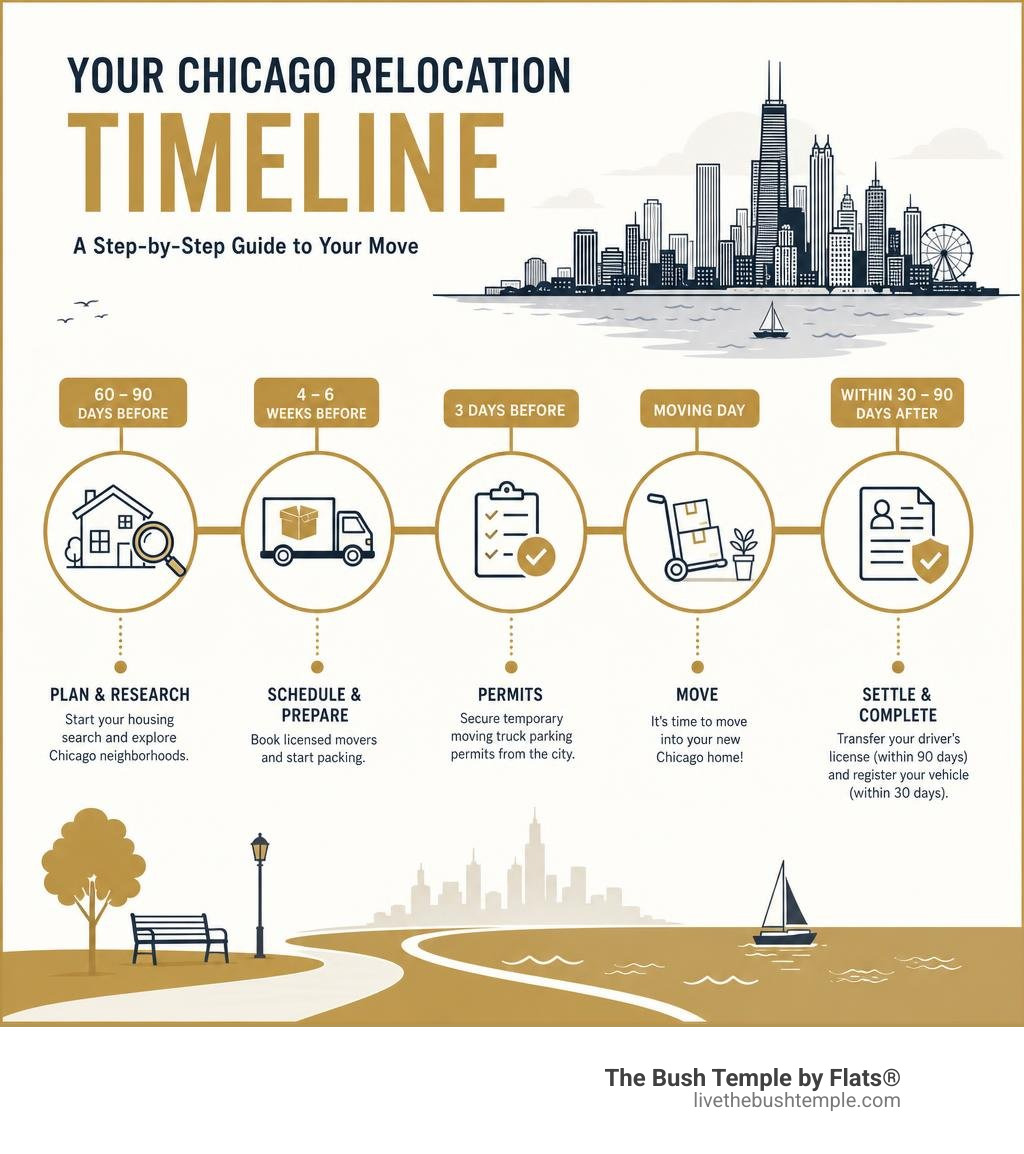
- Timeline: Start your housing search 60 to 90 days before your target move date.
- Neighborhoods: Research the city's unique areas to find the right fit for your commute and lifestyle.
- Logistics: Book licensed movers 4 to 6 weeks in advance, especially if you are moving during the peak summer season.
- Documentation: Prepare to transfer your driver's license within 90 days and register your vehicle within 30 days of establishing residency.
- Permits: Secure temporary moving truck parking permits through the city at least three days before moving day.
Relocating to a major metropolitan area involves many moving parts. Staying organized is the best way to avoid stress and ensure a smooth transition to your new home.
By understanding the key milestones of a Chicago relocation, you can stay ahead of building rules, permit requirements, and paperwork deadlines.
The Ultimate Moving to Chicago Guide: What to Expect
Moving to a new metropolitan area requires understanding the local economic landscape, cultural foundations, and daily rhythms. As the economic engine of the Midwest, Chicago features a highly diversified economy. The city serves as a major hub for professional services, corporate headquarters, healthcare, technology, and logistics. Over thirty Fortune 500 companies maintain headquarters in the metropolitan area, providing a robust job market for relocating professionals.

Beyond corporate opportunities, the city boasts world-renowned cultural institutions. New residents can spend weekends exploring the Art Institute of Chicago, the Field Museum, and the Griffin Museum of Science and Industry. The city's architectural heritage is visible along every street, from historic skyscrapers downtown to beautifully preserved residential structures in outlying neighborhoods.
To truly understand the city before arriving, reviewing the 20 Things to Know Before Moving to Chicago 2026 can help newcomers avoid common relocation mistakes and transition seamlessly into the local lifestyle.
Navigating Chicago Neighborhoods and Housing
Chicago is structurally defined by its 77 official community areas, which are further divided into dozens of unique, self-contained neighborhoods. The residential landscape is highly varied, offering everything from historic brick two-flats and stone Greystones to modern high-rise developments.

When evaluating housing options, understanding historical trends and current availability is essential. Reviewing Chicago Rental Market Trends provides valuable context on lease cycles, seasonal demand fluctuations, and what to expect during the application process.
Finding Your Perfect Match: Neighborhood Information Chicago
Selecting the right area to live in shapes the daily experience of the city. Detailed Neighborhood Information Chicago reveals how different areas cater to varied lifestyles:
- River North: Known for its dense concentration of art galleries, design studios, and dining options. Living in the River North District Chicago offers an energetic lifestyle with immediate access to the downtown core and the Chicago Riverwalk.
- Gold Coast: A historic neighborhood characterized by quiet, tree-lined streets, brownstones, and upscale boutiques. Exploring Chicago Gold Coast Apartments is ideal for those seeking a sophisticated residential feel steps away from Lake Michigan.
- Lakeview: Located on the North Side, this area features historic walk-ups, lakefront access, and vibrant commercial corridors.
- Wicker Park: A creative hub known for its independent boutiques, music venues, and diverse dining options.
- West Loop: A former industrial area transformed into a premier culinary and tech destination, featuring converted loft spaces and modern mid-rise buildings.
For a comprehensive breakdown of these areas, consulting a guide on the Best Chicago Neighborhoods can help narrow down the search.
Using a Moving to Chicago Guide to Find the Right Apartment
The apartment search in Chicago moves quickly. It is highly recommended to begin researching buildings and scheduling tours 60 to 90 days before the desired move-in date. Utilizing online listing platforms, working with local apartment locators, and directly contacting managed properties are the most effective ways to find available units.
When reviewing potential leases, pay close attention to building-specific move-in rules. Many high-rise properties require freight elevator reservations weeks in advance and mandate that moving companies provide a Certificate of Insurance (COI).
Additionally, pet policies must be verified early in the search. Many properties allow a maximum of two pets per apartment and may require specific pet screenings or registration. For those moving with animals, referencing the Chicago Pet Friendly Apartments Ultimate Guide ensures that both human and animal needs are met. For those seeking modern designs and updated finishes, the New Apartments Chicago 2026 Guide highlights the latest residential developments across the city.
Transportation and Getting Around the Windy City
Chicago features one of the most comprehensive public transportation networks in the United States, operated by the Chicago Transit Authority (CTA). The system consists of the "L" train network—with eight color-coded lines connecting neighborhoods to the central Loop—and an extensive grid of bus routes.
To navigate the city like a local from day one, reviewing Moving to Chicago? 25 Things You NEED to Know First (2026) - Little Chicago Guide offers valuable insights into transit schedules, ticketing, and neighborhood navigation.
Transit Options in Your Moving to Chicago Guide
Public transit, walkability, and cycling infrastructure make it highly practical to live in the city without a personal vehicle:
- Ventra Card: This unified fare system is used for all CTA trains, buses, and Pace suburban buses. Contactless payment options and the Ventra mobile app make managing fares straightforward.
- Metra Commuter Rail: For travel to the outer neighborhoods and surrounding suburbs, the Metra system offers fast, reliable service from major downtown stations.
- Walkability and Cycling: Many central neighborhoods boast high walkability scores. The city features over 400 miles of bike lanes and the famous 18.5-mile Lakefront Trail, which runs along Lake Michigan.
- Car Ownership Considerations: Bringing a car to the city requires careful planning. Street parking in many residential areas requires a residential parking permit zone sticker, purchased through the City Clerk. Additionally, vehicle owners must buy an annual Chicago City Vehicle Sticker within 30 days of moving.
Weather Realities and Seasonal Preparation
Chicago experiences four distinct seasons, each bringing its own set of activities and preparation requirements. While summers are celebrated for street festivals, farmers' markets, and free public beaches along Lake Michigan, winters require physical and logistical preparation.
Winter preparation involves investing in high-quality insulated outerwear, waterproof boots, and thermal layers. Logistically, the city enforces strict snow removal rules. Property owners and occupants are legally required to clear snow from adjacent sidewalks within 24 hours of a snowfall to ensure safe pedestrian passage.
| Month | Average Temperature (°F) | Average Snowfall (Inches) |
|---|---|---|
| January | 22°F | 11.5" |
| April | 49°F | 1.0" |
| July | 81°F | 0.0" |
| October | 54°F | 0.1" |
Frequently Asked Questions About Moving to Chicago
Is it feasible to live in Chicago without a car?
Yes, living without a car is highly feasible, particularly in transit-rich neighborhoods such as River North, the Gold Coast, and the West Loop. The CTA "L" train and bus systems provide comprehensive coverage, supplemented by rideshare services and the Divvy bike-share program. Eliminating a personal vehicle also removes the expenses of downtown parking, city stickers, and insurance.
What are the essential legal requirements when relocating to Illinois?
New residents must transfer their out-of-state driver's license to an Illinois license within 90 days of moving. Additionally, vehicles must be registered with the Illinois Secretary of State within 30 days, and a Chicago City Vehicle Sticker must be purchased within 30 days to avoid municipal fines.
What is the best time of year to plan a move to Chicago?
September is often considered the ideal month to move. The extreme heat of summer and the freezing conditions of winter are avoided, and moving company demand begins to stabilize compared to the peak summer rush from May through August. Moving during the winter can offer more flexible lease terms, but requires navigating snow logistics and cold temperatures.
Conclusion
A successful relocation to Chicago relies on early planning, thorough neighborhood research, and an understanding of city logistics. By securing housing in a well-connected neighborhood, preparing for the seasonal climate, and organizing moving permits ahead of time, the transition can be an exciting and smooth experience.
For those seeking a premium living experience on the border of River North and the Gold Coast, The Bush Temple by FLATS® offers luxury apartments that combine historic charm with modern amenities. Featuring upscale studio to two-bedroom units, a rooftop lounge, and a state-of-the-art fitness center, these residences place the best of the city right at the doorstep.
To find the perfect home in these vibrant communities, Explore FLATS® Chicago Neighborhoods and start planning your move today.